Fazeli Hotel Yazd
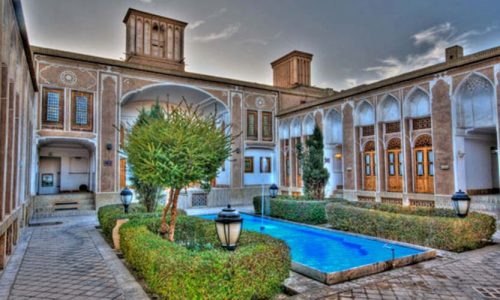
Booking Fazeli Hotel Yazd with Persian Touring. Special price with discount. Start from 24$ per night
MORE
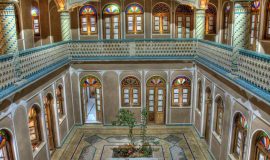
Booking Fazeli Hotel Yazd with Persian Touring. Special price with discount. Start from 24$ per night
MORE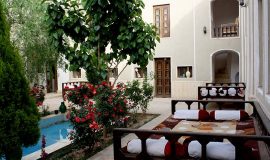
Booking Traditional Kourosh Hotel Yazd with Persian Touring. Special price with discount. Start from 12$ per night
MORE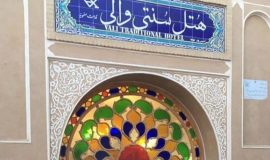
Booking Vali Traditional Hotel Yazd with Persian Touring. Special price with discount. Start from 41$ per night
MORE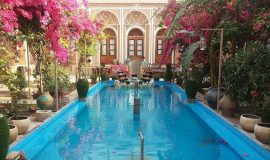
Booking Traditional Kohan Hotel Yazd with Persian Touring. Special price with discount. Start from 28$ per night
MORE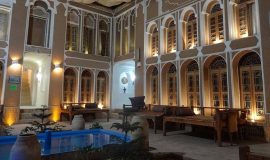
Booking Traditional Hotel Yazd with Persian Touring. Special price with discount. Start from 22$ per night
MORE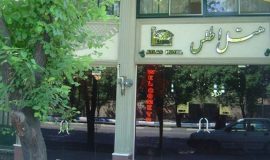
Booking Atlas Hotel Yazd with Persian Touring. Special price with discount. Start from 22$ per night
MORE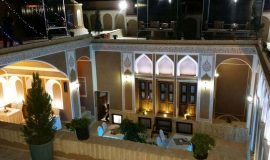
Booking Royay Ghadim Traditional Hotel Yazd with Persian Touring. Special price with discount. Start from 35$ per night
MORE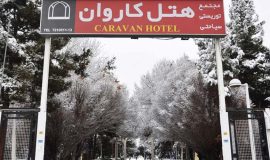
Booking Caravan Hotel Yazd with Persian Touring. Special price with discount. Start from 22$ per night
MORE
Booking Mozafar Traditional Hotel Yazd with Persian Touring. Special price with discount. Start from 23$ per night
MORE
Aliterate group in Yazd attempted to find the same in a period of two years. It has been erected in a part of the Iran Shahr High School of Yazd with a 1,000 square meters hall. The following are on display here, subjects such as botany, geology, zoology, human and animal anatomy sections.

The building of Mirror Place museum has a foundation of 837 square meters and is located in a garden 8,174 square meters in area. The museum building was formerly belonging to a wealthy personality of Yazd.
After the Islamic revolution, it has been converted into the museum. In this museum, calligraphic collections, guns, coins, books, stamps, locks, a bridle (of the second millennium BC.), samples of Lurestan’s bronze, endowed works of the deceased Seyed Hossein Heidari (a Yazdi collector) and some other articles are displayed. This museum is located in Kashani Yazdi street opposite Yazd’s Haft-e-Tir Park.

The historical vicinity of Zarach is located to the northwest of Yazd, and according to narrations, it is one of the constructions of “Zalzar”.
In keeping with historical facts, it is said that, Amin Mobarezeddin Mohammad and his sons were responsible for the erection of Mozaffar Abad of Zarach. Arsalan Khatoon, the spouse of Ala al Dowleh Kalenjar, constructed the famous water conduit of this village.
This region is also the birthplace of reputed personalities and writers. Historical remnants of this area are, Khajeh Khezrollah Abad Mausoleum, the Allah Abad Crypt and water reservoir, historical Zarach Castle, Amir al Moumenin Mosque in Sardeh Zarach, the Sheer Sar Cheshmeh water Mill and Water Reservoir.
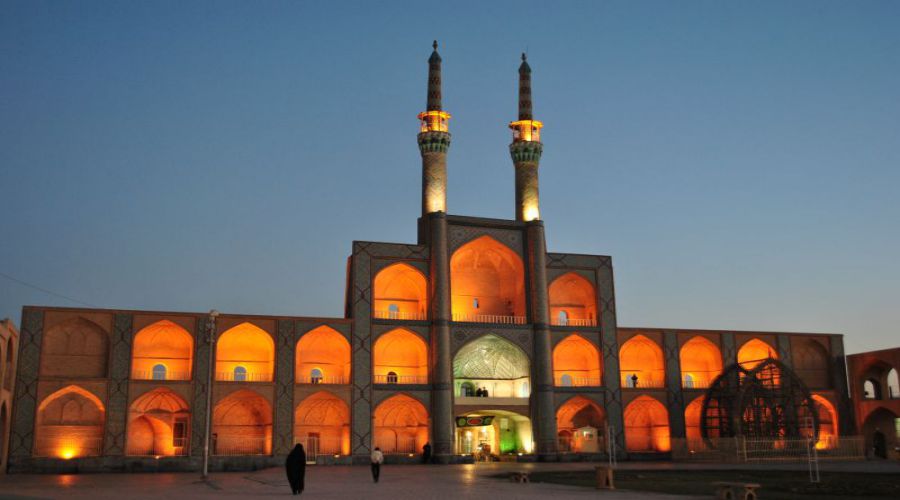
Amir Chakhmagh Complex is a prominent structure in Yazd, Iran, noted for its symmetrical sunken alcoves. It is a mosque located on a square of the same name. It also contains a caravanserai, a tekyeh, a bathhouse, a cold water well, and a confectionery. At night, the building is lit up after twilight hours after sun set with orange lighting in the arched alcoves which makes it a spectacle. During the Iran–Iraq War and the Iraq wars with the United States and Afghanistan, many Iraqis and Afghanis have come to inhabit the Amir Chakhmagh Square.
The mosque is located on a square of the same name, named after Amir Jalaleddin Chakhmagh, a governor of Yazd during the Timurid dynasty (15th–16th century CE). Separate living areas for Iraqis and Afghanis are nearby. The complex is situated opposite what was the Yazd Water Museum.
Amir-Chaghmaq Square, according to Dr. Vahdat Zad, an architectural historian who has worked extensively on the spatial aspects of the square, was built in the 15th century by Jalal-al-Din Amir-Chakhmagh, the governor of Yazd in the Timurid era. This square was established on the north side of an important mosque called the Old Mosque, known today as Amir-Chakhmagh Mosque. According to Vahdat Zad, “the mosque was also founded by Amir-Chakhmagh between 1418 and 1438. The same year the mosque was inaugurated, Haj Qanbar Jahanshahi, who was the subsequent governor, constructed a bazaar and caravanserai at the sides of the square”.
Many parts of the complex deteriorated until the 18th century in the Safavid era, when Bahador Khan Shams Yousef Meibodi renovated some parts and reconstructed the caravanserai in the same location. The complex again encountered erosion until the late 19th century when, according to Vahdat Zad, the Tekyeh was built by Abu-al-Qasim Rashti at the entrance of the bazaar.
Most of the changes in Amir-Chakhmagh Square were implemented during the modernization period of Reza Shah. By completing Pahlavi Street in 1935, the northern part of the square, which connected it with the Bazaar, was demolished. It seems the caravanserai was demolished at the same time in order to develop the square in a more orderly rectangular shape.
Notably, the demolition of the square, as Vahdat Zaid argues, “had nothing to do with the establishment of Soraya Street in 1943. It more likely occurred when Shah Street and Soraya Street were connected in the late 1950s. Nothing remained of the square then, except the Tekyeh. The municipality even tried to demolish the Tekyeh when one of the offers collapsed, but the archaeology office resisted strongly. Instead, they filled the two arcades on both sides in 1963 to prevent further drag”.
MORE
Kavire Loot or the Dasht-e Kavir, also known as Kavir-e Namak, and the Great Salt Desert, is a large desert lying in the middle of the Iranian plateau. It is about 800 km (500 mi) and 320 km (200 mi) with a total surface area of about 77,600 km2 (30,000 sq mi), making it the Earth’s 23rd largest desert. The area of this desert stretches from the Alborz mountain range in the northwest to the Dasht-e Lut in the southeast and is partitioned between the Iranian provinces of Khorasan, Semnan, Tehran, Isfahan, and Yazd.
Dasht means ‘plain’ in Persian. It is named after the salt marshes (“kavirs”) located there. Namak means ‘salt’.
Central in the desert lies the Kavir Buzurg (Great Kavir), which is about 320 km long and 160 km (99 mi) wide. In the west lies the Daryahcheh-e Namak (“salt lake”), of 1,800 km2 (690 sq mi). It contains some large salt plates in a mosaic-like shape. It is part of a 4,000 km2 (1,500 sq mi) protected ecological zone, the Kavir National Park. One of the most desolate places of Dasht-e Kavir is the Rig-e Jenn (“devil’s dunes).
The Dasht-e Kavir’s climate is arid and receives little rain and snow each year. However, the surrounding mountains on all side, provide plenty of runoff to create vast seasonal lakes, marshlands, and plays. Temperatures can reach 50 °C (122 °F) in summer, and the average temperature in January is 22 °C (72 °F). Day and night temperatures during a year can differ up to 70 °C (158 °F). Rain usually falls in winter.
The desert soil is covered with sand and pebbles; there are marshes, seasonal lakes, and seasonal river beds. The hot temperatures cause extreme vaporization, which leaves the marshes and mud grounds with large crusts of salt. Heavy storms frequently occur and they can cause sand hills reaching up to 40 m in height. Some parts of Dasht- e Kavir have a more steppe-like appearance.
The Kavir was a series of vast lakes in the immediate postglacial time, stretching to about 3,000 years ago. The Asian monsoon rain reached deep into central Iran at the time, bringing heavy summer rain that formed numerous lakes in the closed basins of central Iranian Plateau that form the Kavir and other deserts in the area. There are inscriptions at teppeh Sialk noting a visit by the local queen to the ruler of the town, identified as Tell-i Bakun, southeast of Yazd, by “sailing the sea”! Copious shorelines at various elevations still extant in the Kavir tell tales of these post-glacial, monsoonal lakes in central Iran where the desserts now dominate.
Vegetation in the Dasht-e Kavir is adapted to the hot and arid climate as well as to the saline soil in which it is rooted. Common plant species like shrubs and grasses can only be found in some valleys and on mountain tops. The most widespread plant is mugwort.
The Persian ground jay is a bird species living in some parts of the desert plateaus, along with Houbara bustards, larks and sandgrouses.
Persian gazelles live in parts of steppe and desert areas of the central plateau. Wild sheep (Ovis Orientalis), camels, goats (Capra aegagrus) and Persian leopards are common in mountainous areas. Night life brings on wild cats, wolves, foxes, and other carnivores. In some parts of the desert, the Persian onager (gur in Persian) and sometimes even the Asiatic cheetah can be seen. Lizards and snakes live in different places in the central plateau.
The extreme heat and many storms in the Dasht-e Kavir cause extensive erosion, which makes it almost impossible to cultivate the lands. The desert is almost uninhabited and knows little exploitation. Camel and sheep breeding and agriculture are the sources of living to the few people living on its soil. Human settling is restricted to some cases, where wind-blocking housing constructions are raised to deal with the harsh weather conditions. For irrigation, Iranians developed a sophisticated system of water-wells known as qanats. These are still in use, and modern globally used water-revenue systems are based on their techniques.
MORE



Get Social