Preparing for Iran in 2026 starts with verification, not a generic packing list. Check whether travel is appropriate for your nationality, confirm the visa route for your passport, plan a lawful cash budget, verify insurance in writing and prepare for communication or transport disruption.
The checks below replace the outdated promises and fixed rules previously published on this page. Review them again shortly before departure because conditions can change after a booking is made.
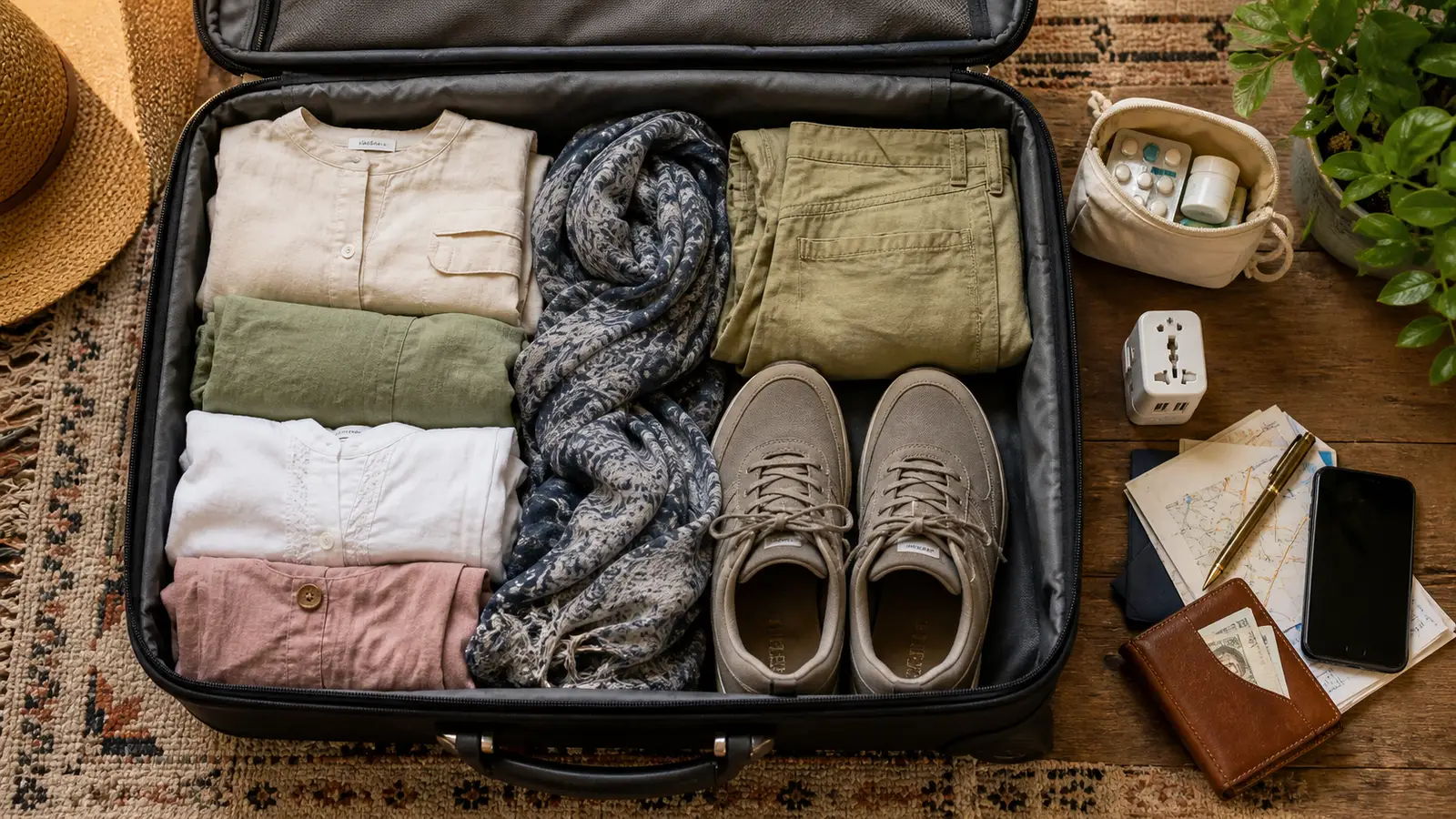
The lead image is illustrative. It is a packing prompt, not a complete legal or medical checklist.
1. Read the current travel advice for every nationality you hold
Start with the official advice issued by your own government. It can explain current security warnings, detention risks, limits on consular help, insurance implications and rules affecting dual nationals. Some governments advise against all travel to Iran. A visa or confirmed booking does not override that advice or guarantee safety.
2. Confirm the visa and passport route
Do not assume that visa on arrival is available because an old article says so. The route depends on the passport, other nationalities, residence, travel purpose and current Iranian rules. Use Iran’s official eVisa channel and the Iranian embassy or consulate responsible for your application.
Apply early and do not buy a non-refundable itinerary on the assumption of approval. Our official-source Iran visa process guide explains the verification sequence and the limits of agency assistance.
3. Build a cash plan
International bank cards generally do not work in Iran. Do not rely on PayPal, a foreign credit card, travellers’ cheques or an informal shop arrangement for emergency cash. Confirm lawful payment methods with every provider and bring enough exchangeable currency for the trip plus an emergency margin.
Learn the difference between rials and tomans, use authorised exchange offices and keep declaration and exchange receipts. See the updated Iran money and currency guide.
4. Verify travel insurance in writing
A policy may exclude Iran or become invalid when travel goes against a government warning. Ask the insurer to confirm the destination, dates, activities, pre-existing conditions, medical care and evacuation coverage in writing. Do not rely on a fixed airport price table or an assumption that a policy can always be bought on arrival.
Keep the policy number and emergency contact both on your phone and on paper. Read our Iran travel insurance checklist.
5. Prepare money-independent communications
A local SIM can help, but internet and mobile service may be filtered, slowed or shut down. Download offline maps, tickets, addresses and translations before departure. Save the full address of your accommodation in Persian and agree on check-in times with someone outside Iran.
Buy a SIM only from an authorised outlet and verify current registration rules. See the updated Iran SIM card and internet guide.
6. Pack adaptable clothing
Clothing in major Iranian cities is now more varied and relaxed than many old guides show, but compulsory dress rules remain and enforcement can change. Women should carry a scarf and an outer layer; covering the stomach, upper arms and most of the legs is a practical visitor baseline. Men will usually be comfortable in a short-sleeved shirt and long trousers.
Religious sites, official buildings and some smaller communities may expect more coverage. Read our current What to Wear in Iran guide.
7. Check health needs and medication
Ask a qualified travel-health professional about vaccines and personal risks well before departure. Bring enough permitted prescription medication in original packaging with supporting documents. The legal status of a medicine can differ in Iran, so confirm it with the responsible Iranian authority before packing.
Do not assume a product will be available locally. Official advice has reported shortages of some medicines and more limited care outside major cities.
8. Reconfirm transport, accommodation and an exit plan
Flights, airspace, borders, roads and communications can change with little notice. Confirm each service directly for your date. Keep a written record of the provider, cancellation terms, address and contact route. Do not treat an online booking confirmation as proof that entry, transport or safety is guaranteed.
Know how you would change or leave the itinerary if conditions deteriorate. Share the plan with a trusted contact and keep documents available offline.
A final 48-hour check
- Read the latest official travel advisory.
- Confirm passport, visa and airline document requirements.
- Reconfirm every flight, transfer and accommodation.
- Check the cash plan and currency declaration rules.
- Save insurance and emergency contacts offline.
- Download maps, addresses and essential documents.
- Check medication, clothing and weather for the actual route.
Sources and review method
- UK government Iran travel advice.
- Australian government Iran travel advice.
- Iran Ministry of Foreign Affairs eVisa portal.
Reviewed by: Persian Touring Editorial Team
Last reviewed: 16 August 2026
Review note: Fixed visa-on-arrival claims, PayPal and card promises, static blocked-app lists and unsafe circumvention advice were removed.