
An Iran visa application should begin with three checks: your passport and any other nationality you hold, Iran’s official eVisa channel, and the latest travel advice issued by your own government. Requirements are not identical for every traveller, and an application does not guarantee approval. This guide explains a verification-first process without promising a fee, timeframe, visa type, collection point or outcome.
Read your government’s travel advice before applying
Several governments currently advise their citizens against all travel to Iran. The United Kingdom’s FCDO advises against all travel and describes significant detention and consular-support risks. The United States lists Iran at Level 4, Do Not Travel. The Government of Canada advises avoiding all travel. Advice, airspace access, insurance validity and border conditions can change quickly. Read the advice for every passport or nationality connected to you before deciding whether to continue.
UK travel advice for Iran · US travel advisory for Iran · Canadian travel advice for Iran
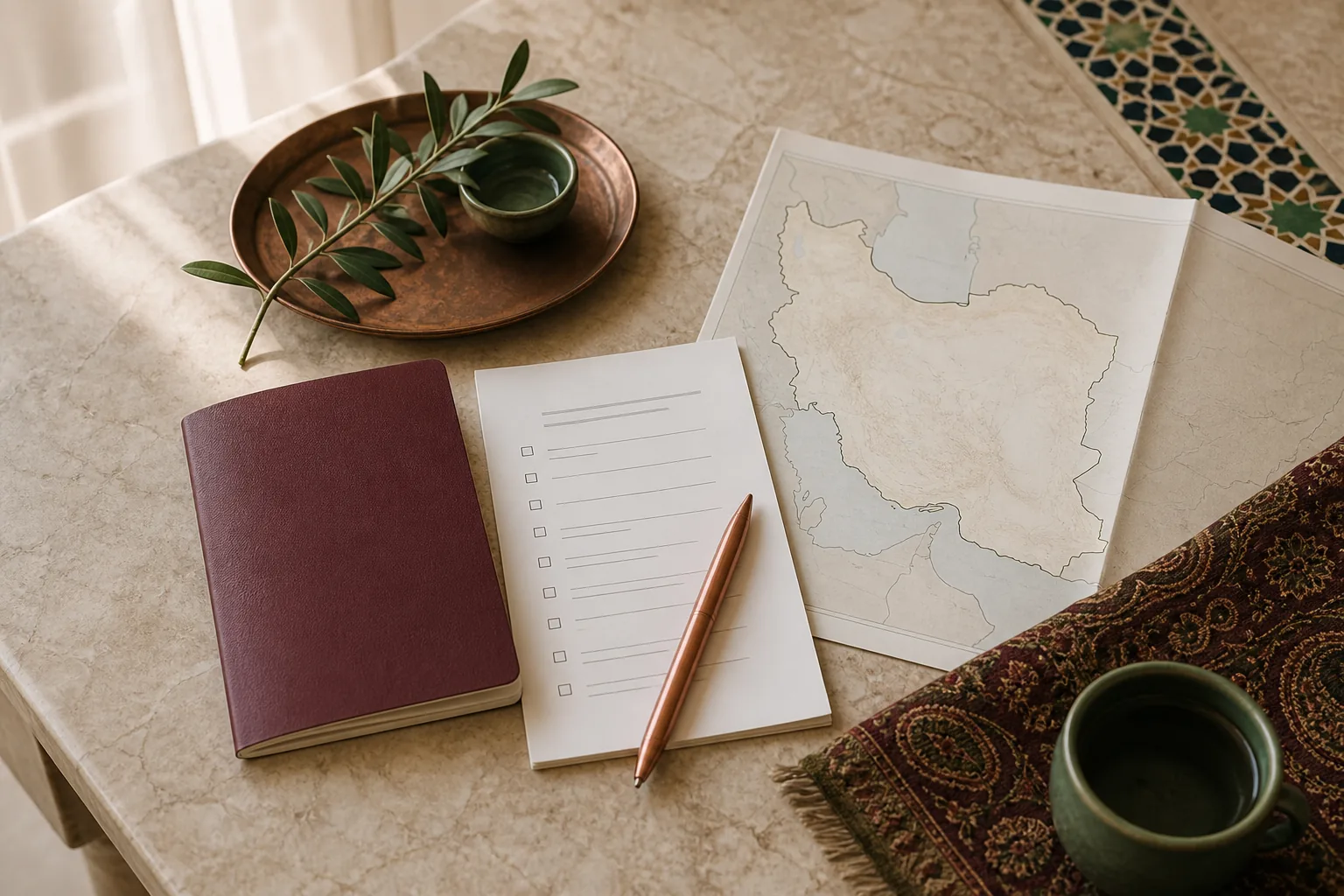
The Iran visa process in seven checks
There is no single checklist that is safe for every applicant. Passport rules, travel purpose, sponsorship, place of application and collection arrangements may differ. Treat the following sequence as a decision framework, then follow the instructions supplied by the relevant authority.
- Identify every nationality that may affect the application. Start with the passport you intend to use. Note any dual nationality, Iranian parentage or other circumstance that could cause Iranian authorities to treat you as an Iranian national. Your home government may have limited or no ability to provide consular help if Iran does not recognise your other nationality.
- Read the latest advice from your own government. Check the main advisory, entry requirements, safety information and insurance implications. If you hold more than one nationality, review each relevant government source. Save the links and subscribe to updates where that service is offered.
- Check Iran’s official eVisa information. Use the Iran Ministry of Foreign Affairs eVisa portal as the starting point for official application information. Confirm that the route you are considering applies to your passport, purpose of travel and intended collection location.
- Confirm the route with the relevant Iranian mission or authority. If official online information is unclear, contact the Iranian embassy or consulate responsible for where you live or plan to collect the visa. Ask what they require now, not what an old blog post or forum says.
- Prepare only the documents requested for your case. Match names, passport details, travel purpose and contact information exactly. Do not send sensitive identity documents through an unverified form, chat account or email address. Keep secure copies of what you submit.
- Submit and track through the confirmed channel. Use the reference or tracking method supplied by the official route. A submission, reference number or preliminary review is not a visa approval. Do not make non-refundable arrangements based only on an application receipt.
- Recheck before departure. Confirm the visa details, passport validity rule, airline transit requirements, entry conditions, insurance position and current travel advisory close to departure. A visa does not remove safety, airline or border restrictions.
How to prepare documents safely
Old Iran visa articles often publish a fixed document list. That can mislead applicants because the authority may request different information for different passports, visa purposes or missions. Build your file from the official instructions shown for your application route.
Make the identity details consistent
Use the spelling and order printed in the machine-readable section of your passport. Check the passport number, dates, nationality, place of birth and contact details before submitting. If you have more than one passport, do not assume you can omit the other nationality when the form asks about it.
Use a compliant, recent image when requested
Follow the portal or mission’s current photo specifications. Do not copy dimensions or dress requirements from an unrelated nationality’s guidance. For example, the UK government’s entry-requirements page includes instructions specific to British applicants; those details should not be presented as a universal rule.
Keep the travel purpose accurate
A tourist visit, family visit, business activity, journalism, research and other purposes may not use the same route. Describe the actual purpose and ask the authority which category applies if it is unclear. This rebuilt page focuses on tourist-visa planning and does not provide a business-visa procedure.
Protect passport and personal data
Before sharing a scan, check the recipient, domain, privacy terms and reason it is needed. Avoid sending passport files into unsolicited social-media conversations. Ask how long a service provider keeps documents and how deletion requests are handled. Persian Touring’s terms and privacy information explains the site’s own data-handling context.
Why nationality and dual nationality matter
Nationality can change both the application route and the personal risk assessment. Some applicants may be told to use an organised-tour or sponsor route. Some dual nationals may be treated only as Iranian by Iranian authorities, which can sharply limit consular assistance from another country.
The UK’s official entry guidance says British passport holders who choose to travel against FCDO advice should check the organised-tour or sponsor requirement with the Iranian Embassy. It also warns that Iran does not recognise dual nationality and may consider some people Iranian even when they do not. The US and Canadian advisories contain their own nationality-specific warnings. These sources are not interchangeable: use the guidance issued for you.
Our next nationality-specific explainer will examine the verification route for US, UK and Canadian passport holders. Until then, use the official links above and do not rely on a general visa checklist for those passports.
Official application and collection routes
Begin at the official MFA eVisa portal, but verify which Iranian mission, consular section or collection point is responsible for your case. A third-party service can help organise information, yet only the relevant Iranian authority can decide whether a visa is issued and what further evidence is required.
Be cautious with any page that guarantees approval, publishes a success rate without auditable evidence, promises a fixed processing time, or requests payment before clearly identifying the service and refund terms. Also be cautious when a provider treats an authorisation reference, application receipt and issued visa as if they are the same thing.
Keep a dated verification record
Record the date, page address and authority behind each instruction you rely on. Save the application reference and any official correspondence in a secure place, but avoid storing passport copies in a shared notes app or an unprotected inbox. If two official pages appear to conflict, ask the responsible mission which instruction applies to your case and retain its reply. This simple record helps you distinguish confirmed requirements from assumptions and makes a later recheck much faster.
If you are still deciding whether Iran fits your plans, read the broader Travel to Iran planning guide. It connects official-advice checks with money, communications, local-law and route-planning considerations. The Iran travel guide provides destination context, while the private Iran tours page shows the kinds of itineraries the local team can discuss after the eligibility and safety questions have been addressed.
What Persian Touring can and cannot do
Persian Touring can provide a preliminary route review based on the passport, travel purpose and collection location you tell us. The team can explain which official source to verify, identify information that appears incomplete and discuss how a proposed itinerary relates to a visa-support request.
Persian Touring does not issue visas and cannot guarantee that an application will be accepted, processed by a particular date or decided in a particular way. A preliminary conversation is not legal advice, consular advice or approval. The relevant Iranian authority controls requirements and decisions. Your own government controls its travel advice and determines what consular help may be available.
Need help identifying the route to verify?
Read the limits of the Iran tourist visa assistance service, then send your passport nationality, country of residence, travel purpose, preferred dates and intended collection location. Do not send a passport scan in the first message.
Questions to resolve before relying on a plan
- Which passport will you use to enter and leave Iran?
- Do you hold another nationality or have circumstances that Iran may treat as Iranian nationality?
- What does your own government currently advise, and could travelling against that advice affect insurance?
- Which official Iranian route applies to your travel purpose and passport?
- Where are you expected to submit, follow up or collect documents?
- What personal data will be requested, by whom, and through which verified channel?
- Which parts of your travel plan can remain refundable or flexible until the decision is complete?
- What will you recheck immediately before travel?
Official sources used for this guide
- Iran Ministry of Foreign Affairs eVisa portal
- UK FCDO travel advice for Iran and entry requirements
- US Department of State Iran Travel Advisory
- Government of Canada travel advice for Iran
Reviewed by: Persian Touring Editorial Team
Last reviewed: 10 August 2026
Review method: Official Iranian eVisa access point and passport-country government travel advice checked. Requirements can change without notice. If you find an outdated statement or broken official link, please contact the editorial team so the page can be reviewed.