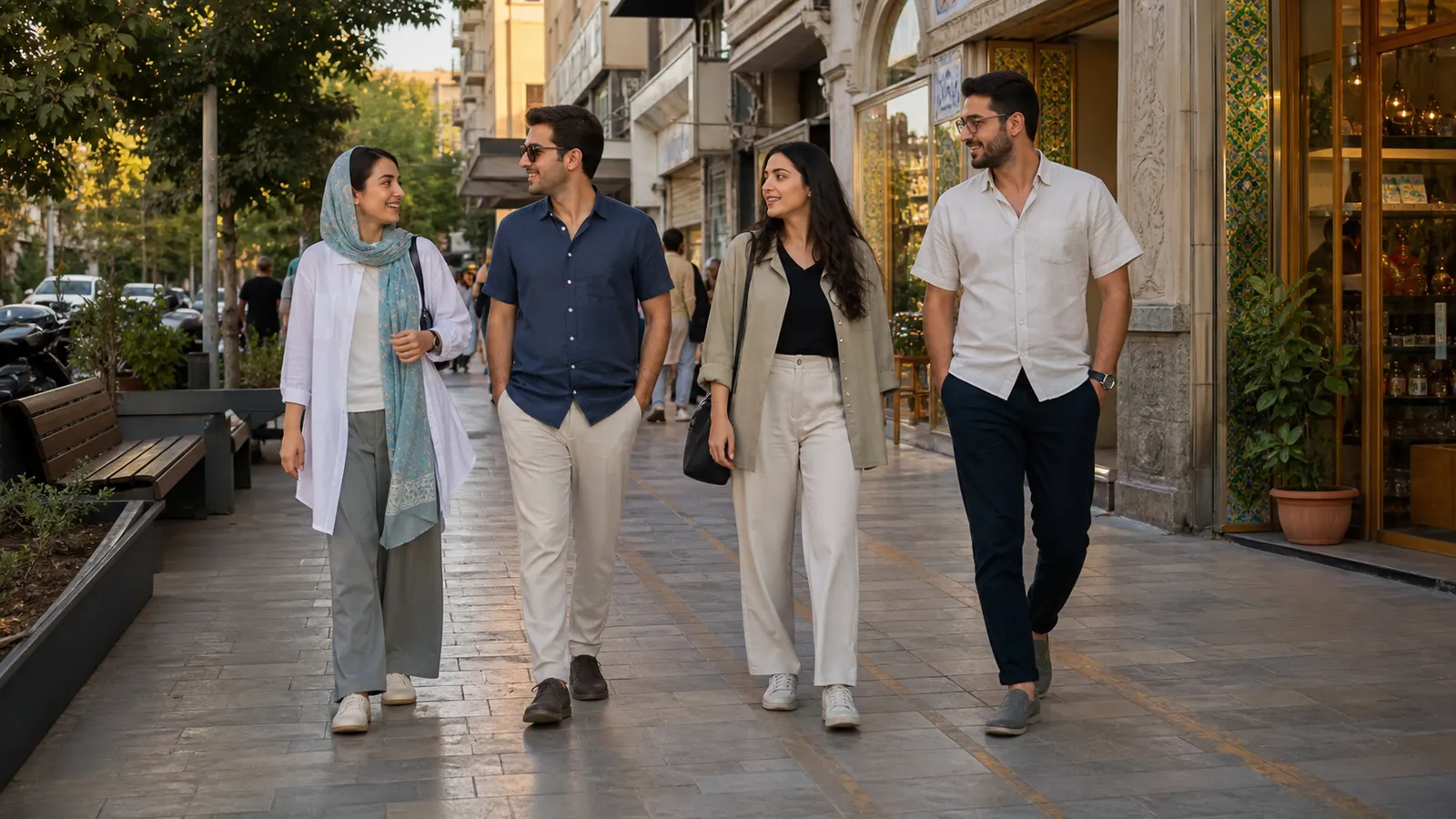
What people wear in Iran today is more varied than many older travel guides suggest. In major cities, you may see women without headscarves, shorter outer layers and a wider range of personal styles. However, compulsory dress rules have not been repealed, they also apply to foreign visitors, and enforcement can change by place and time.
This guide separates the legal position from everyday street practice and gives visitors a practical, lower-risk packing plan. It was reviewed on 16 August 2026 with local context from the Persian Touring team and current official travel guidance.
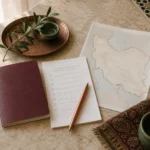
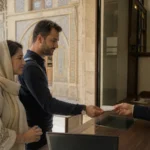
The lead image is illustrative. It shows the wider range of clothing now visible in major Iranian cities, not an official dress code.
The short answer
Iranian street style has become noticeably more relaxed and diverse in recent years. You may see local women with uncovered hair and outfits that would have been unusual in older travel photographs. This social reality does not cancel the law. A visitor should arrive with a scarf and an easy outer layer, then use current local advice rather than assuming that what one person wears in Tehran will be treated the same way everywhere.
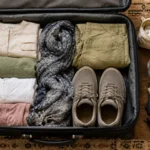
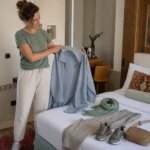
For a simple, adaptable baseline, women can pack trousers or a long skirt, a top that covers the stomach and upper arms, a lightweight overshirt or jacket, and a scarf that can be used when required. Men will usually be comfortable in a T-shirt or short-sleeved shirt with long trousers. Religious sites, government offices and some formal settings can require more coverage.
Law and everyday life are not the same thing
Compulsory dress rules remain in force. A proposed stricter hijab law was paused in December 2024, but that pause did not repeal the existing rules. Current government travel advisories continue to tell women to cover their hair, arms and legs in public and warn that enforcement can include detention, fines or denial of services.
At the same time, everyday clothing in many large cities is less uniform than those formal descriptions imply. Enforcement is inconsistent and can tighten without notice. It may also be more conservative at airports, religious places, official buildings, smaller towns and during periods of political tension. Treat a relaxed street scene as local context, not legal permission or a guarantee.
What women can wear in Iran
A practical outfit for arrival
- Full-length or cropped trousers, jeans, or a long skirt.
- A T-shirt, blouse or tunic that covers the stomach and upper arms.
- A light overshirt, cardigan, manteau or jacket that adds coverage when needed.
- A lightweight scarf kept easy to reach.
- Comfortable shoes or sandals suitable for uneven pavements and long walks.
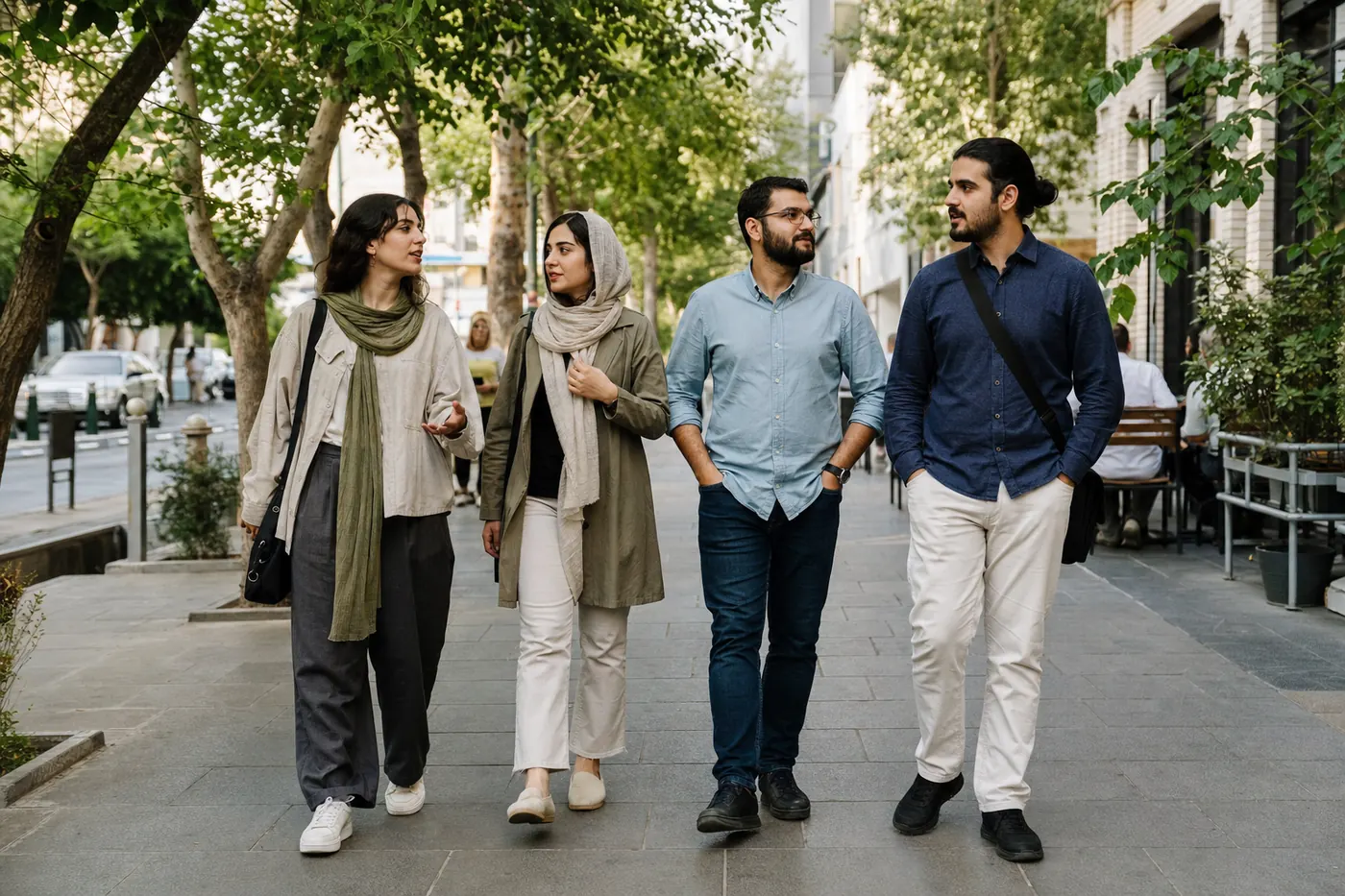
There is no general rule requiring dark colours. Bright colours, patterns, denim, trainers, boots and makeup are common. The most useful strategy is layering: it lets you adjust quickly without packing a separate wardrobe.
How much of the arms and legs should be covered?
In everyday city life you may see exposed forearms, ankles and shorter jackets. For a cautious visitor, covering the upper arms and most of the legs is a sensible starting point. Avoid a bare stomach, very low neckline or sleeveless top in public. Carrying a longer layer makes it easy to adapt if a venue applies a stricter standard.
Do women still need a headscarf?
Many Iranian women now go without one in public, especially in larger cities. The legal requirement nevertheless remains, and official advice still tells female visitors to carry and wear a headscarf in public. Enforcement is not predictable enough for a travel company to promise that a tourist will only receive a warning. Keep a scarf with you and follow current instructions from your airline, accommodation, guide and the venue you are entering.
What men can wear in Iran
T-shirts, polo shirts and short-sleeved shirts are common for men. Long trousers or jeans are the easiest choice for city streets, restaurants, museums and formal visits. Shorts and sleeveless tops are better kept for private spaces, sport, some beach or resort settings, and places where a local host confirms they are appropriate.
A suit is not normally necessary. For a business meeting, religious visit or government office, choose long trousers, a neat shirt and closed shoes unless your host gives different guidance.
Places with stricter expectations
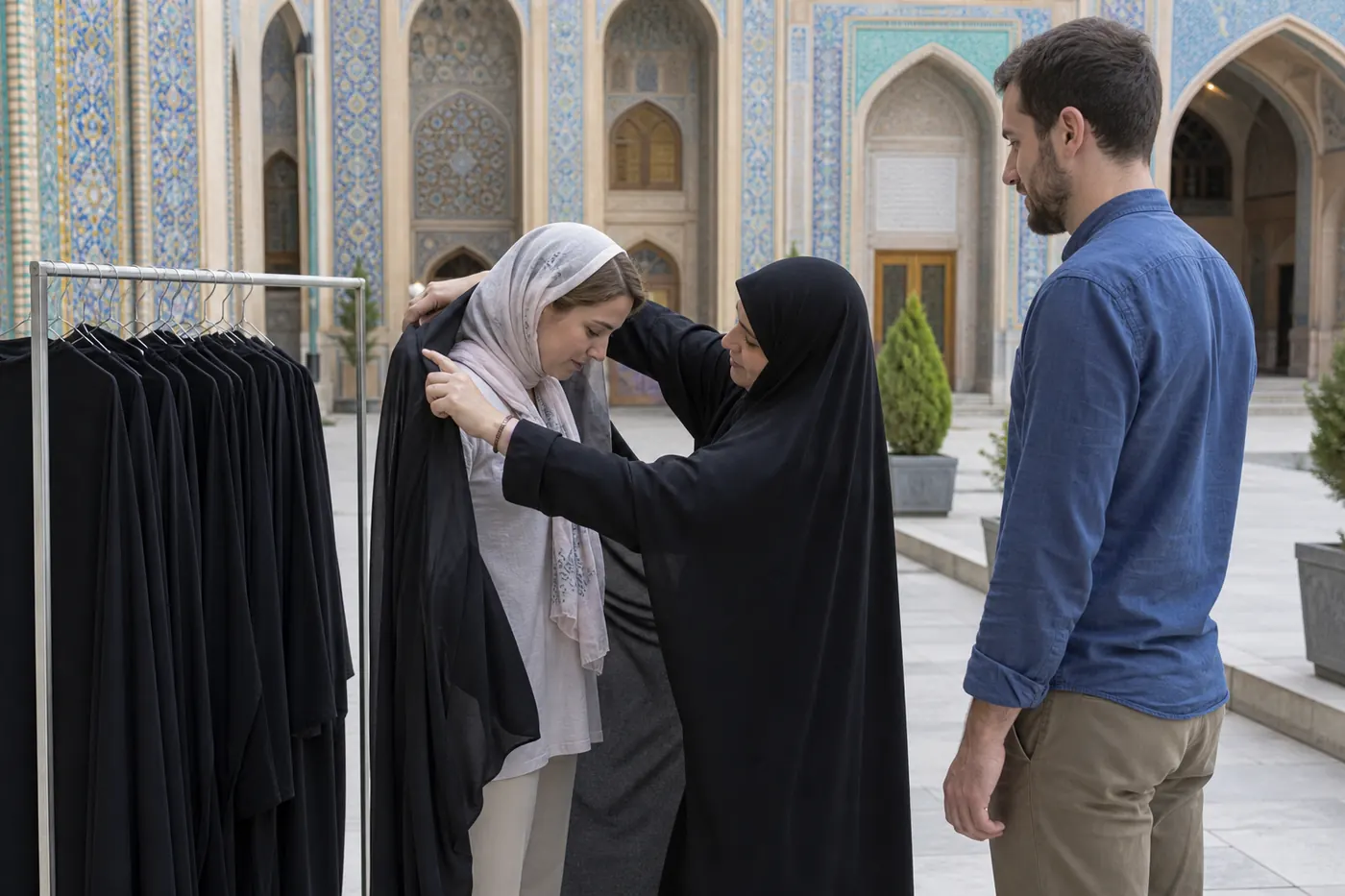
- Religious sites: women may be asked to wear a chador supplied at the entrance. Men and women should cover more of the arms and legs and follow staff instructions.
- Airports and flights: have your scarf and outer layer ready before arrival and follow the airline’s instructions.
- Government offices and formal appointments: choose a more conservative version of your everyday outfit.
- Smaller towns and rural areas: local practice can be more conservative than central Tehran, Shiraz or Isfahan.
- Private homes: ask your host. Expectations differ between households, particularly when unrelated men and women are present.
Season-by-season packing
Spring and autumn
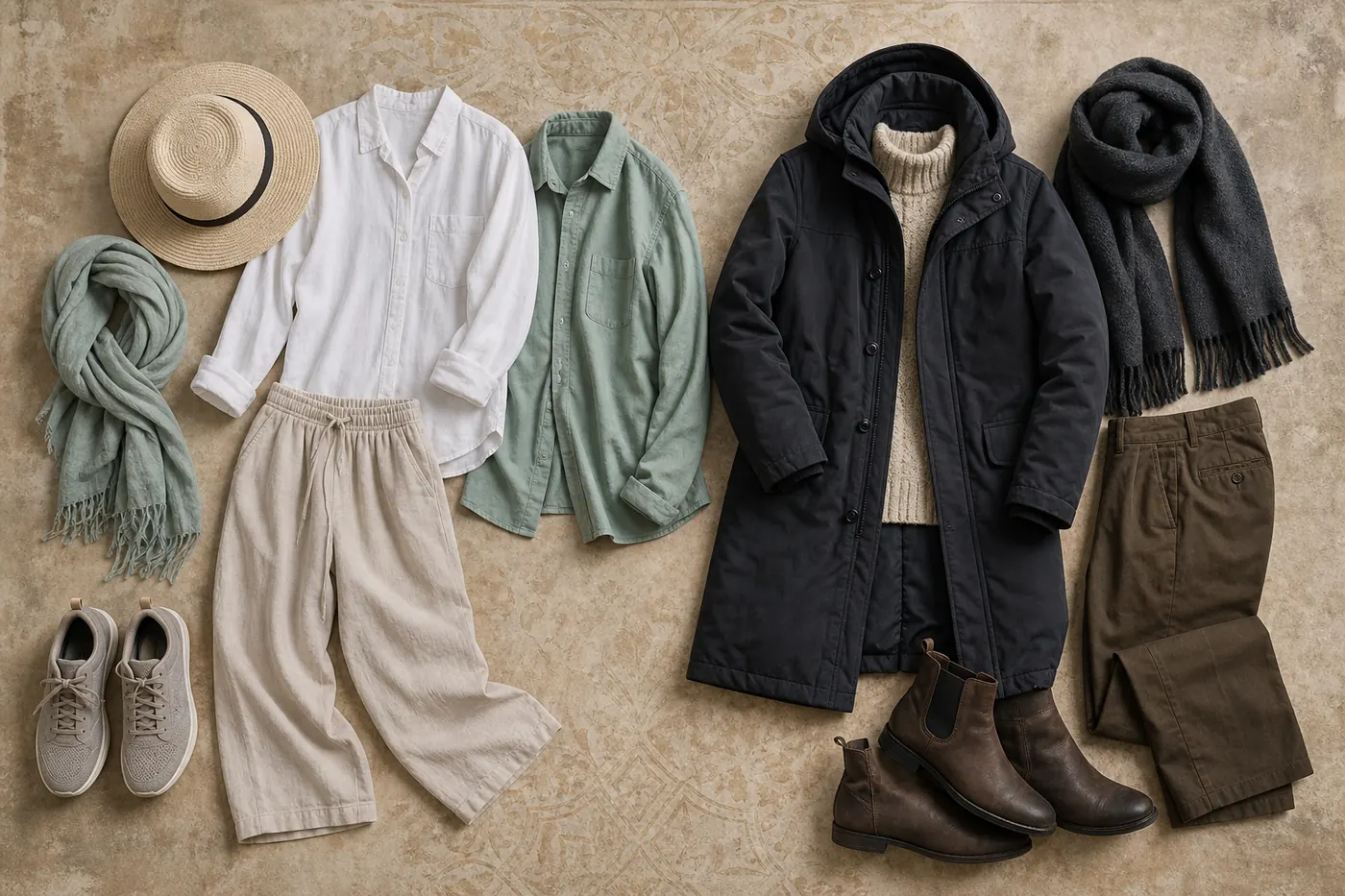
Bring breathable trousers, a light long-sleeved layer and a scarf. Temperatures can change sharply between day and evening, so one cardigan or light jacket is useful.
Summer
Choose loose natural fabrics, a light overshirt and a thin scarf. Avoid relying on a heavy black coat; it is neither required nor comfortable. Sun protection and water matter as much as the dress code.
Winter
Normal winter clothing works well: trousers, boots, knitwear and a coat. A warm scarf can serve as both weather protection and head covering when needed.
A simple packing checklist
- Two or three pairs of trousers or long skirts.
- Breathable base layers with sleeves.
- One light overshirt or long cardigan.
- One warmer layer for evenings or winter travel.
- One or two scarves that do not slip easily.
- Comfortable walking shoes and socks for religious visits.
- A small bag that keeps the scarf and extra layer accessible.
Before you travel
Dress guidance can change quickly and does not replace nationality-specific travel advice. Check the latest advice issued by your own government, confirm current requirements with the Iranian embassy or authority responsible for your passport, and ask your host or guide about the places on your itinerary. For the wider planning context, read our responsible guide to travel in Iran.
Sources and review method
- Visit Iran practical information for the official tourism guidance on modest clothing and religious sites.
- UK government Iran travel advice for current legal and enforcement warnings.
- Australian government Iran travel advice for current dress and local-law guidance.
- UN Human Rights Council fact-finding report for the status of the proposed stricter law and documented enforcement context.
Reviewed by: Persian Touring Editorial Team, Isfahan
Last reviewed: 16 August 2026
Review note: This article distinguishes current street practice from the legal position. Enforcement can change without notice. If you find an outdated statement, please contact the editorial team.