Women visiting Iran do not need a special all-black wardrobe. Everyday clothing in major cities is now much more varied than older guides show. The practical approach is to bring normal clothes that can be layered: trousers, a top that covers the stomach and upper arms, a light overshirt, and a scarf kept within reach.
This guide focuses on what to pack, how to adapt your outfit and where stricter expectations still apply. The legal requirement for hijab has not been repealed, even though many Iranian women now go without a headscarf in public and enforcement varies.
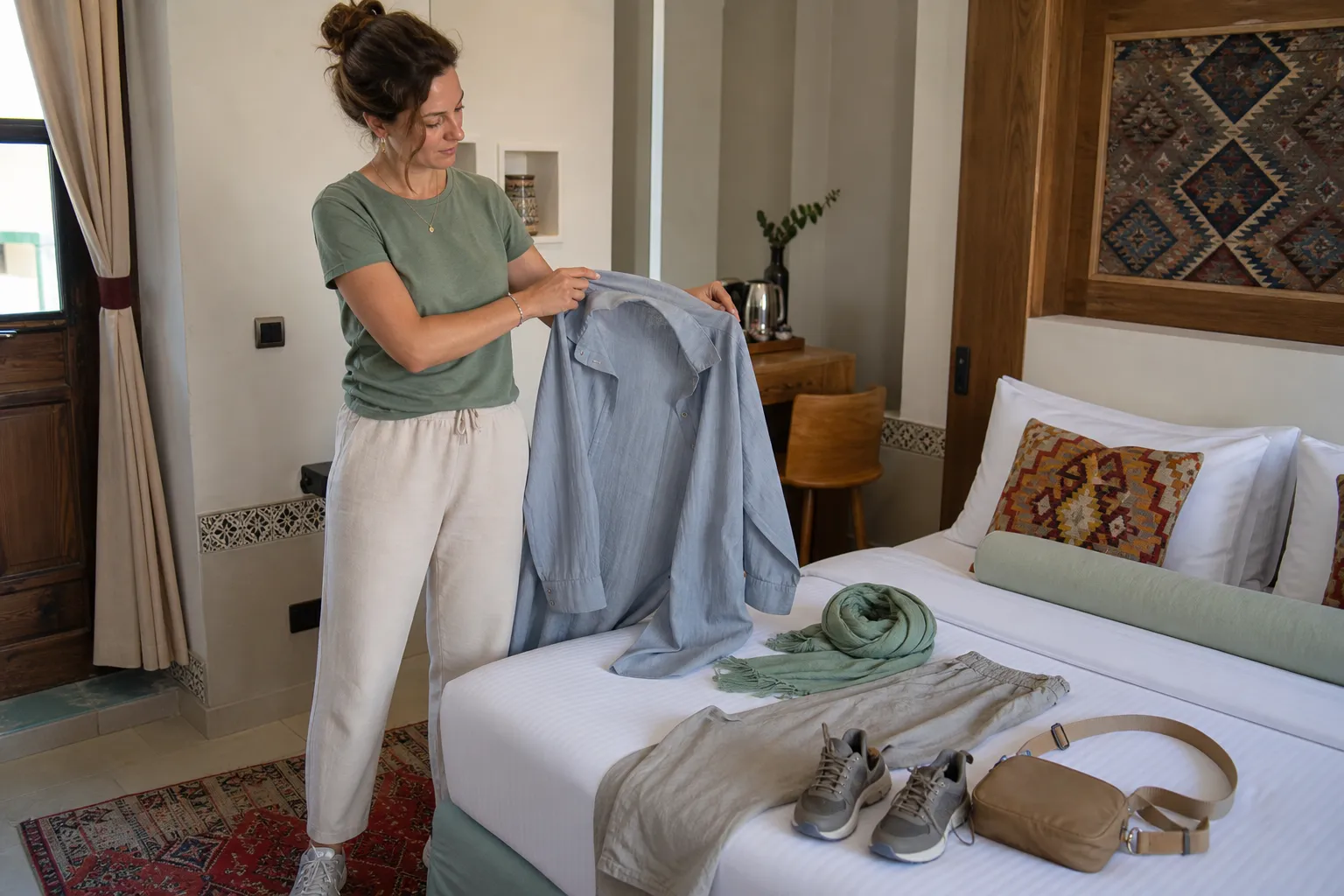
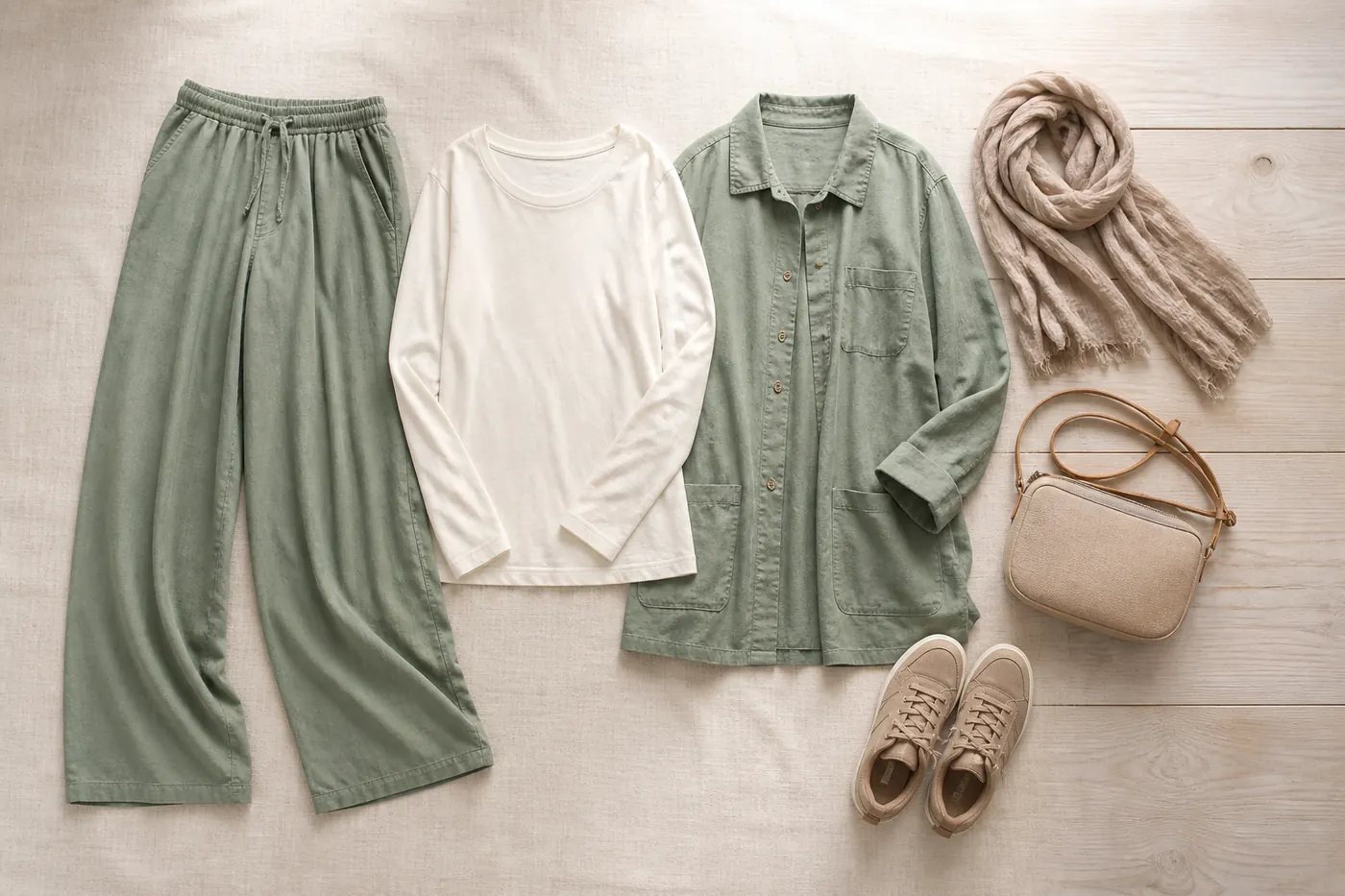
The lead image is illustrative. It shows one adaptable travel outfit: breathable layers, trousers, a scarf and comfortable shoes.
What should a woman pack for Iran?
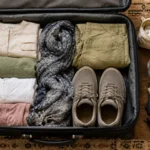
Start with the same clothes you would choose for a city trip, then add one easy layer. You do not need to buy a manteau before travelling unless you want one. A long linen shirt, tunic, cardigan or lightweight jacket can do the same job.
- Trousers or jeans: full length is the simplest option. Cropped trousers that expose the ankles are often seen in cities, but a longer pair is useful for formal or religious visits.
- Base tops: T-shirts and blouses are practical. Choose sleeves that cover the upper arm and avoid a bare stomach or very low neckline in public.
- Outer layer: pack a light overshirt, tunic, cardigan or jacket that reaches around the hip or lower. It does not need to be black or heavy.
- Scarf: bring one that is breathable and not too slippery. Keep it accessible rather than buried in your luggage.
- Shoes: trainers, flats, sandals and boots are all common. Carry socks if you plan to visit a mosque or another place where bare feet may be inappropriate.
What women in Iran wear today
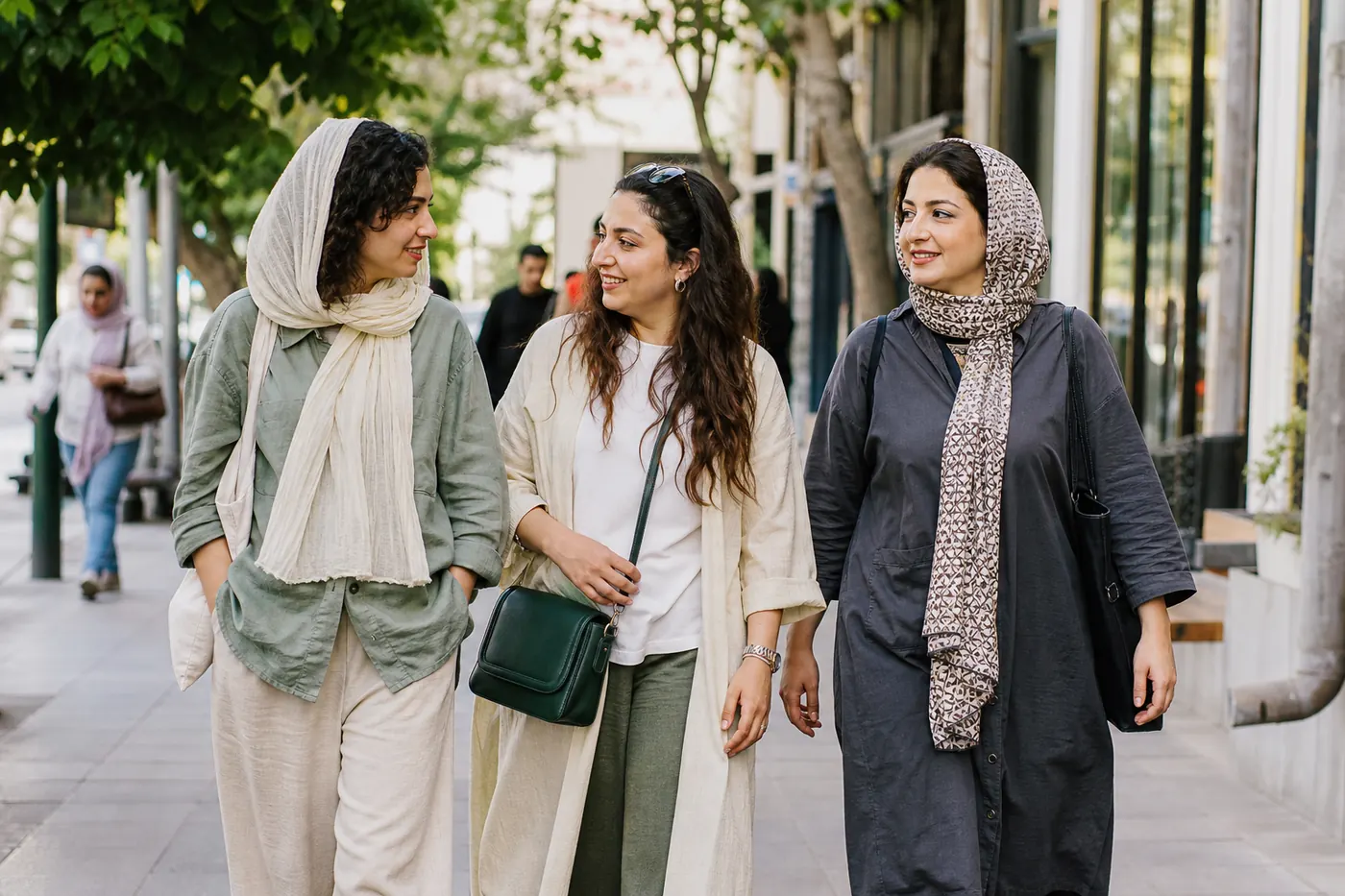
In Tehran, Shiraz, Isfahan and other major cities, women wear a wide range of colours, denim, trainers, tailored jackets, loose shirts and contemporary streetwear. Many women now leave their hair uncovered. Others wear a scarf loosely, and some prefer a more traditional manteau, chador or conservative style.
This diversity matters because the old idea of one uniform Iranian dress code no longer describes daily life accurately. It is equally important not to turn that observation into a safety promise. Compulsory dress rules remain in force, enforcement is inconsistent, and authorities can tighten it at any time.
Do female tourists have more flexibility?
Visitors may sometimes experience more tolerance, but there is no reliable legal exemption for tourists. Do not rely on old advice claiming that the worst possible outcome is a polite warning. The response can depend on the location, the venue and the wider political situation.
A low-friction approach is to begin with an adaptable outfit, watch current local practice and follow instructions from your airline, accommodation, guide or venue. If you are asked to adjust your clothing, do so calmly and promptly.
Can I wear these items?
Skinny jeans or leggings
Skinny jeans are common, usually with a longer top or jacket. Leggings are best treated as a base layer and paired with a longer overshirt or tunic.
Short sleeves
Exposed forearms are widely seen. For visitors, a short sleeve that covers the upper arm is more adaptable than a sleeveless top. Carry a light long-sleeved layer for stricter places.
Sandals and open shoes
Sandals and open shoes are common in warm weather. Comfortable walking shoes are often more useful because pavements and historic sites can be uneven.
Bright colours and patterns
Yes. There is no practical need to wear only black. Colourful scarves, patterned shirts, denim and bright coats are part of everyday Iranian style.
Makeup, jewellery and nail polish
These are commonly worn. Choose what feels normal for you rather than packing around stereotypes about Iranian women.
A dress or skirt
A long dress or skirt can work well, especially with sleeves and a layer for extra coverage. Short skirts are not a practical public option.
When should I dress more conservatively?
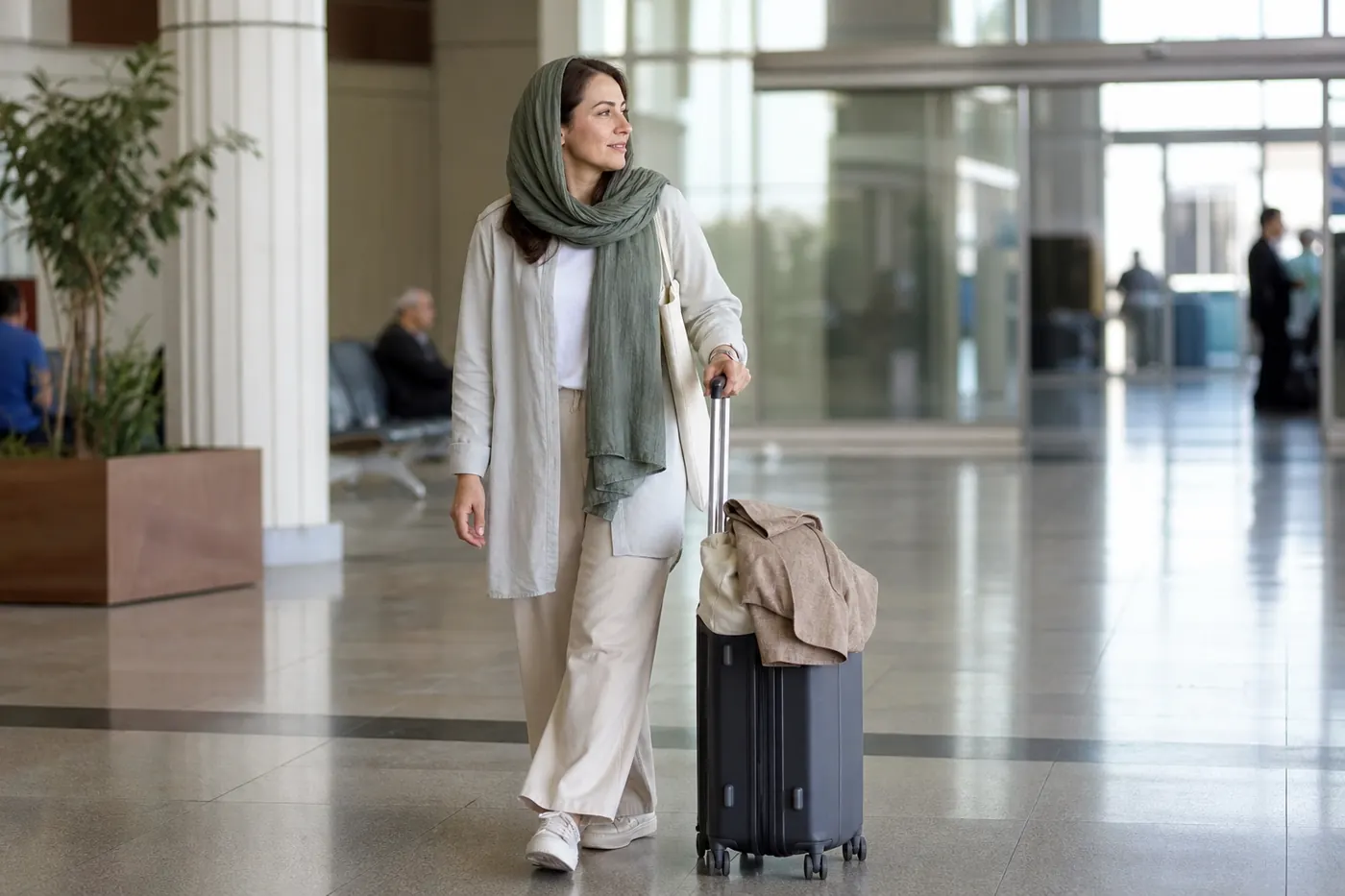
- On arrival: have a scarf and outer layer ready before landing and follow airline instructions.
- At religious sites: cover more of the arms and legs. Some sites provide a chador at the entrance.
- At government offices: use a longer layer and a more formal, conservative outfit.
- Outside major cities: local expectations may be more conservative, so ask someone who knows the area.
- During periods of increased enforcement: follow current local advice rather than a packing list published months earlier.
What about private homes?
Clothing norms vary between households. Some women remove their scarf at home; others cover when unrelated men are present. Ask your host what is comfortable in their home and follow their lead. Do not assume that a private invitation makes every household the same.
What about girls and teenagers?
Do not rely on old blog posts that guess an age based on a child’s appearance. Requirements can differ between entry documents, airlines, public places and venues. Ask the Iranian authority responsible for the child’s passport and check current airline instructions before travelling. Pack a scarf and outer layer for an older child or teenager so she can adapt without stress.
A four-piece outfit that works in most situations
- Comfortable trousers or a long skirt.
- A breathable top that covers the stomach and upper arms.
- A lightweight overshirt, tunic or cardigan.
- A scarf carried in your day bag.
This combination is cooler, simpler and more realistic than buying a heavy travel costume. Add a warmer coat in winter and choose a longer, more conservative version for religious or official visits.
Check again before departure
The difference between law, enforcement and everyday practice can change quickly. Review nationality-specific government advice, ask your airline about arrival requirements, and confirm the expectations for any religious or official places on your itinerary. Our broader What to Wear in Iran guide also covers clothing for men and seasonal packing.
Sources and review method
- Visit Iran practical information.
- UK government Iran travel advice.
- Australian government Iran travel advice.
- UN Human Rights Council fact-finding report.
Reviewed by: Persian Touring Editorial Team, Isfahan
Last reviewed: 16 August 2026
Review note: This page reflects a wider range of contemporary street clothing while keeping the legal and enforcement distinction explicit. Please contact us if a statement needs review.