Plan for Iran as a cash-based trip. International debit cards, credit cards and most foreign banking services do not work in Iran. Bring enough usable foreign currency for your confirmed costs and an emergency margin, then exchange money only through a legal exchange office.
This guide was reviewed on 16 August 2026. It does not publish an exchange rate because rates can move quickly and different rates may be quoted for different transactions.
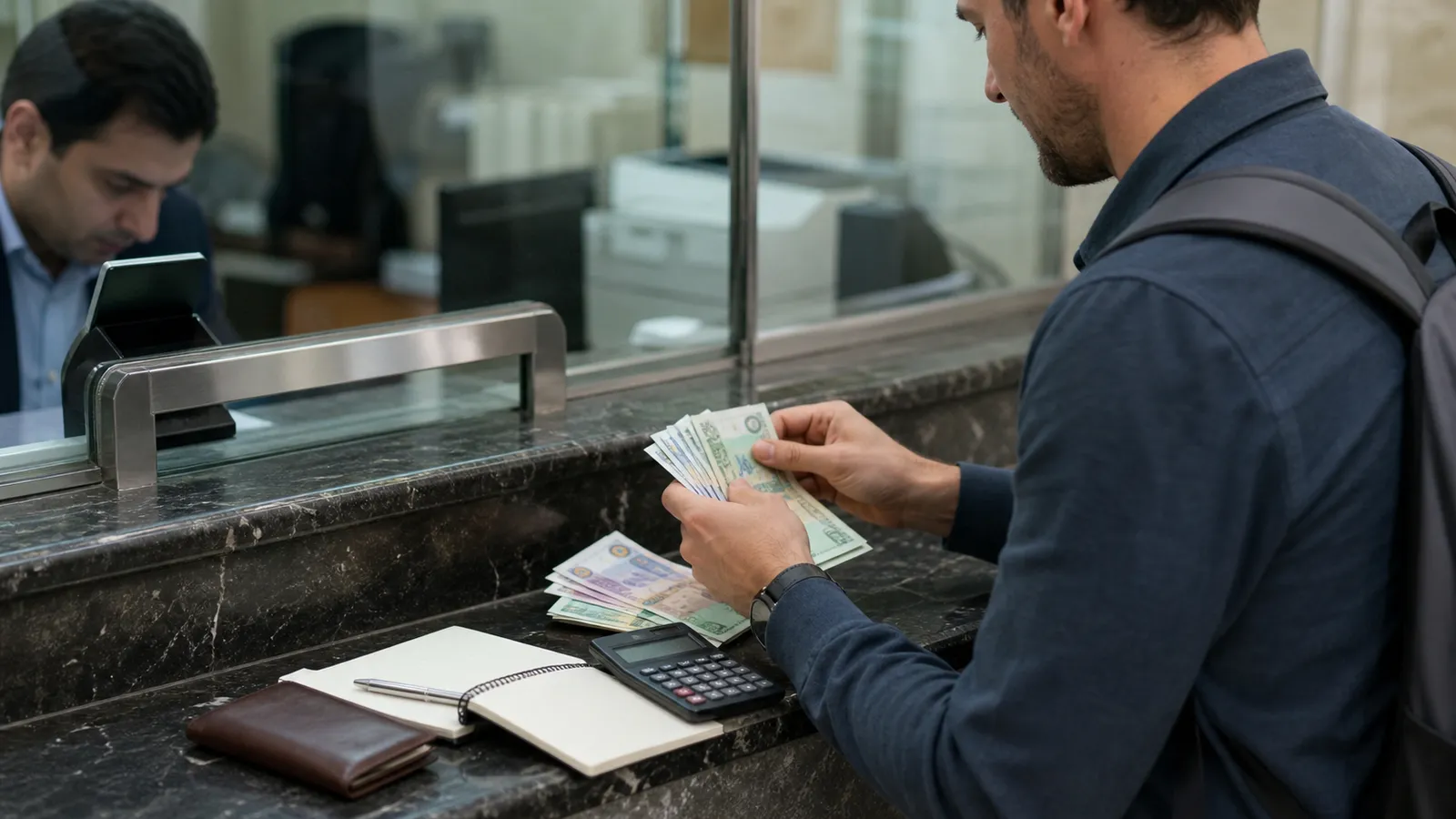
The lead image is illustrative. Always count cash and confirm the written amount at the exchange counter.
Rials and tomans: the essential difference
The Iranian rial (IRR) is the official currency shown on banknotes and formal documents. In everyday conversation and many shop prices, people use tomans. One toman equals ten rials.
A price of 500,000 tomans therefore equals 5,000,000 rials. Spoken prices may also be shortened when the context seems obvious to a local person. It may not be obvious to a visitor. Before paying, ask:
- Is the amount in rials or tomans?
- Can you show the full number on a calculator or write it down?
- Does the amount include every fee?
Do not guess from the number of zeros. Confirm the unit each time, especially for transport, accommodation, tours and higher-value purchases.
Will my bank card work in Iran?
Do not expect a non-Iranian Visa, Mastercard, debit card or cash card to work. Iranian ATMs and card terminals serve the domestic banking system, but that does not mean an international card can access it. Travellers’ cheques are also generally not a practical fallback.
Do not rely on an informal promise that a shop, hotel or third party can charge your foreign card and hand you cash. The arrangement may fail, carry a large fee or create a sanctions and fraud risk. Confirm any lawful payment route with your own bank and provider before departure.
How much cash should I bring?
Build a trip budget before departure using written, date-specific quotes for accommodation, transport and services. Add daily spending and a realistic emergency reserve. If you cannot confirm a legal way to access enough money for the whole trip, reconsider the plan.
Carry only what is lawful under the customs rules that apply on your travel date. Currency declaration requirements can change. Ask the Iranian embassy or customs authority what must be declared and keep the declaration and exchange receipts with your travel documents.
Which foreign currencies are easiest to exchange?
Current UK travel advice says euros and US dollars are more commonly accepted by exchange offices than British pounds. That does not guarantee that a particular note, denomination or currency will be accepted. Notes in poor condition may be refused.
Ask a legal exchange office what it can accept before you travel. Do not publish or rely on a fixed rate from an old article, search snippet or forum post.
Where should I exchange money?
Use an authorised currency exchange office. Changing money on the street is illegal and exposes you to counterfeit notes, theft and rate manipulation. Before leaving the counter:
- Confirm the currency and rate.
- Confirm whether the result is quoted in rials or tomans.
- Count the money in view of the clerk.
- Ask for a receipt and keep it.
- Put away the cash before leaving the office.
How to carry cash more safely
- Split the trip fund between secure locations rather than carrying it all in one wallet.
- Keep a small daily amount accessible and the rest concealed.
- Use a hotel safe only after checking its terms and access.
- Do not display or count large amounts in public.
- Keep digital and paper copies of declarations and receipts separate from the originals.
- Agree in advance how you would contact your insurer or family if funds were lost.
Paying in shops, taxis and restaurants
Ask for the price in tomans and rials if you are unsure. A calculator is useful. For taxis or services without a visible price, agree the amount before the journey or work begins. Keep smaller notes for everyday purchases when possible.
Tipping is situational, not a fixed national percentage. Check whether a service charge is already included and tip only when you choose to. Do not confuse taarof, a convention of polite offering and refusal, with a rule that requires you to repeat a payment offer three times.
Before departure
Recheck your government’s current Iran advice, customs declaration requirements, your bank’s sanctions guidance and every provider payment method. Our responsible Iran planning guide connects money planning with visas, communications, local laws and changing transport conditions.
Sources and review method
Reviewed by: Persian Touring Editorial Team
Last reviewed: 16 August 2026
Review note: No exchange rate, banking hour, cash limit or price is presented as permanent. Confirm all transaction and declaration rules for your travel date.