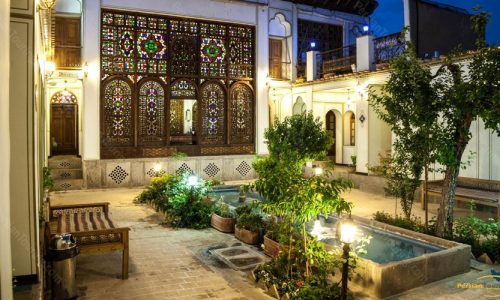
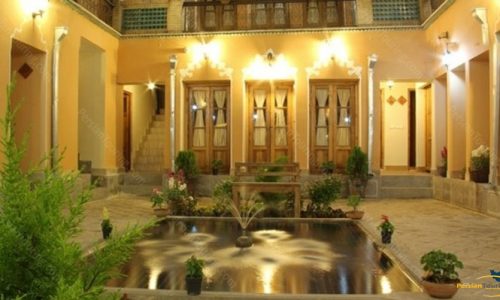
Taktaku Guesthouse Isfahan
Booking Tak Taku Guesthouse Isfahan with Persian Touring. Special price with discount. Start from 21$ per person
MORE
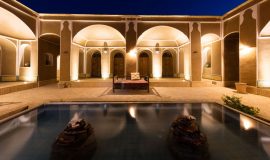
Booking Tak Taku Guesthouse Isfahan with Persian Touring. Special price with discount. Start from 21$ per person
MORE
Booking Iran Hotel Isfahan with Persian Touring. Special price with discount. Start from 20$ per night
MORE
Booking Mehr Hotel Isfahan with Persian Touring. Special price with discount. Start from 34$ per night
MORE
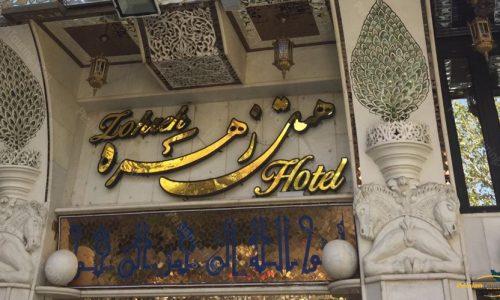
Booking Kaveh Hotel Isfahan with Persian Touring. Special price with discount. Start from 13$ per night
MORE
Booking Tooba Hotel Isfahan with Persian Touring. Special price with discount. Start from 20$ per night
MORE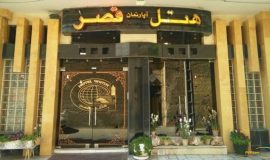
Booking Ghasr Hotel Isfahan with Persian Touring. Special price with discount. Start from 28$ per night
MORE
Booking Karoon Hotel Isfahan with Persian Touring. Special price with discount. Start from 14$ per night
MORE
Booking Ava Hotel Isfahan with Persian Touring. Special price with discount. Start from 14$ per night
MORE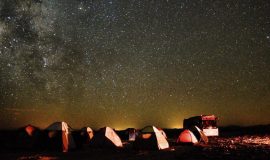
Kolah Ghazi National Park is located in Isfahan, between E5145 to E5215 of east and N3200 to N3230 North latitude. Its area is about 47,142 hectares
Vegetation: Figs, peanuts, pomegranate, jujube, Wake Robin, willow, Khar Shotor, sagebrush, antibacterial, broomrape, Sheng, a variety of grasses, Muscari, tuberose, Celine, different kinds of Gavan, wheat, salt grass, snake grass, rhubarb, sainfoin, Choobak.
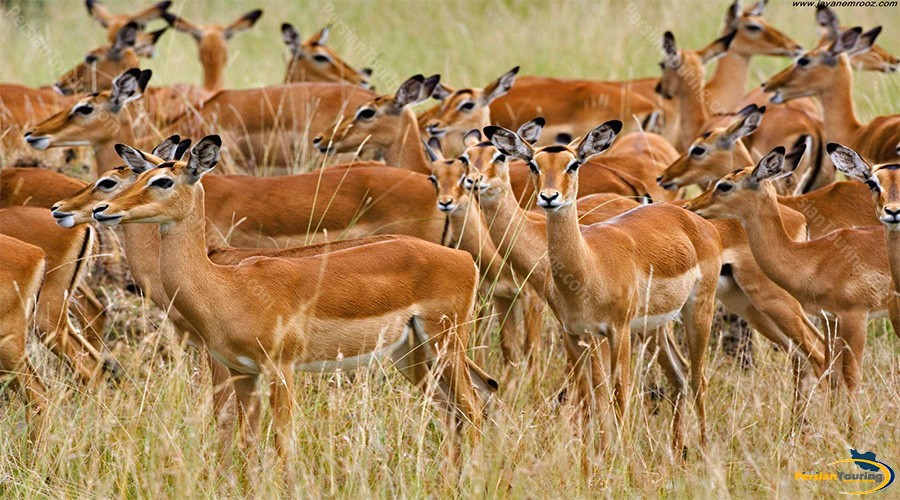
Mammals: goats and sheep, rams and ewes, deer, rabbit, tiger, wolf, hyena, cheetah, fox, jackal, porcupine, wild cat.
Birds: Kabk, Thu, grouse, raven, wrens, Warbler, Blackbird, red tip raven, magpie, Sparrow, and eagles.
Reptiles: Adder, Horned serpents drink, lacy snake, leopard snake, lizard, turtle.
Kolah Ghazi Mountain is a part of Mahdasht Mountains. The highest mountaintop is 2534 meters located in the east south of Esfahan, with the shape like traditional Hat of judges in past. Kolah Ghazi Mountain is a banned hunting of protected areas and wildlife refuges, with various wildlife management stations. There are many sources on the slopes of Mountain for use of protected herds of goats and Pazanan. Usually climbing the mountain is from Lashotor neck in 30 kilometers away from Esfahan in the Shahreza-Esfahan road. This mountain has numerous north and south valleys and its appellation is obvious as has mountaintop and from Esfahan, it seems like a traditional hat of judges.
Kolah Ghazi Mountain has high walls with stones and rocks suitable for climbing, therefore, has been considered by climbers and different paths have opened on it. In a valley called Shahin valley at the east south of the mountain, Esfahan mountain Chakad climbing group effort to build the variety of educational pathways which now 18 different pathways have opened.
MORE
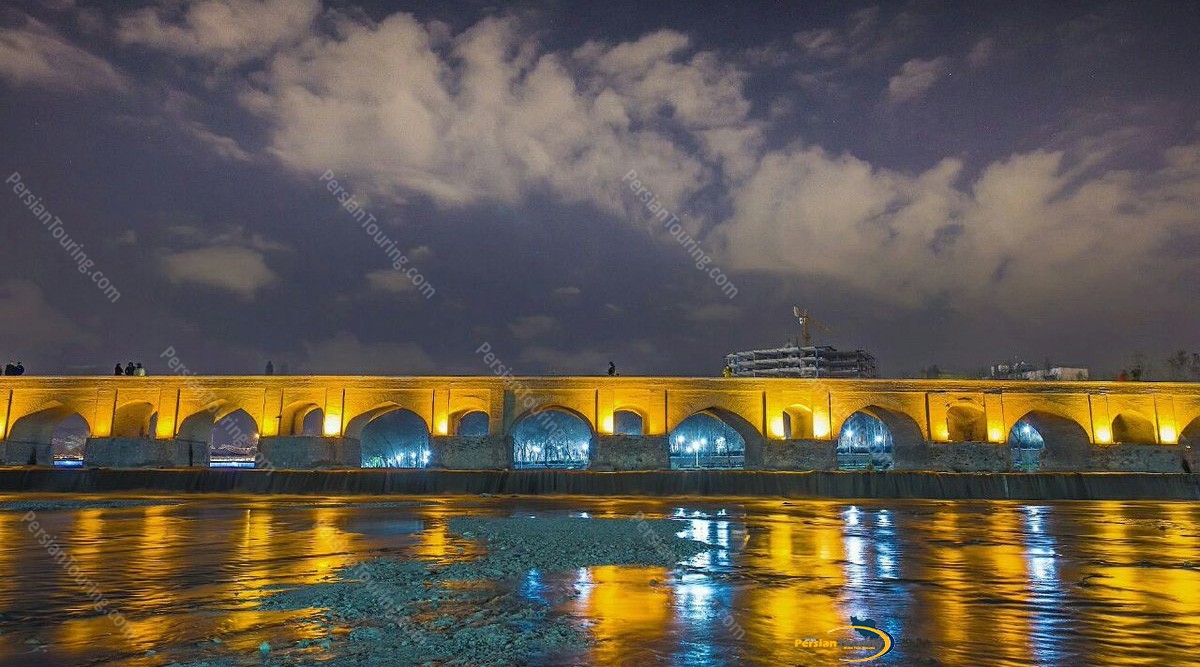
Marnan Bridge Isfahan is a historical bridge in Isfahan, Iran. The current structure of the bridge dates back to the Safavid era, but its foundations are older and possibly as old as the Shahrestan bridge, which dates back to the Sasanian era
Marnan Bridge Isfahan is one of the historic bridges which was constructed west of the Safavid city. It was reconstructed during Safavid period. The original bridge was as old as the Shahrestan Bridge. In accordance with the available documents, the Marnan Bridge was replanned and constructed by the order of Khajeh Sarfaraz who was an Armenian administrator of Armenian district in Isfahan.
This bridge is also called Sarfaraz and its appellation is that one of the rich religious minorities built or repaired it at Shah Soleiman Safavid time and then it was called Sarfaraz and was known as Sarfaraz for some time.


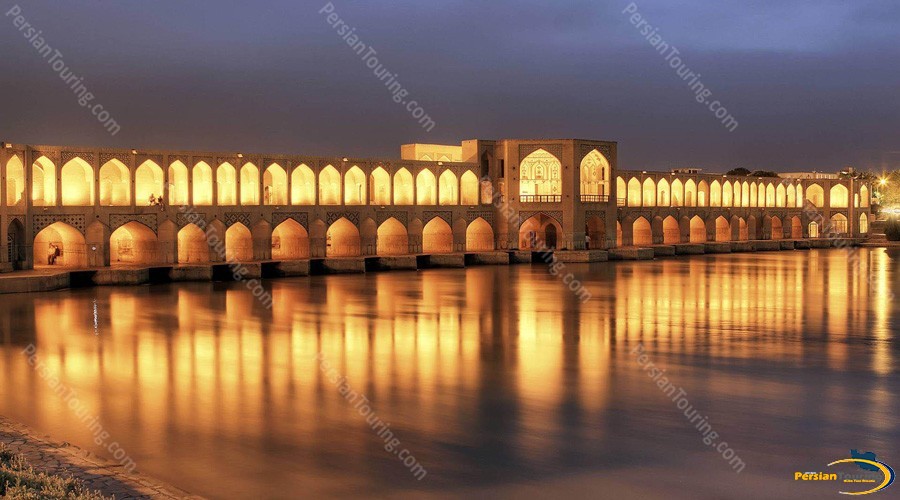
Khaju Bridge is a bridge in the province of Isfahan, Iran, which has been described as the finest in the province. It was built by the Persian Safavid king, Shah Abbas II around 1650, on the foundations of an older bridge. Serving as both a bridge and a dam (or a weir), it links the Khaju quarter on the north bank with the Zoroastrian quarter across the Zayandeh River. Although architecturally functioning as a bridge and a weir, it also served a primary function as a building and a place for public meetings.
This structure was originally decorated with artistic tile work and paintings and served as a teahouse. In the center of the structure, a pavilion exists inside which Shah Abbas would have once sat, admiring the view. Today, remnants of a stone seat are all that is left of the king’s chair.
This bridge is one of the finest examples of Persian architecture at the height of Safavid cultural influence in Iran. In words of Upham Pope and Jean Chardin, Khaju bridge is “the culminating monument of Persian bridge architecture and one of the most interesting bridges extant…where the whole has rhythm and dignity and combines in the happiest consistency, utility, beauty, and recreation.
Khaju Bridge has 23 arches and is 133 meters long and 12 meters wide. The pass way of the bridge is 7.5 meters wide, made of bricks and stones with 21 larger and 26 smaller inlet and outlet channels. The pieces of stone used in this bridge are over 2 meters long and the distance between every channel and the ceiling base is 21 meters. The existing inscriptions suggest that the bridge was repaired in 1873.
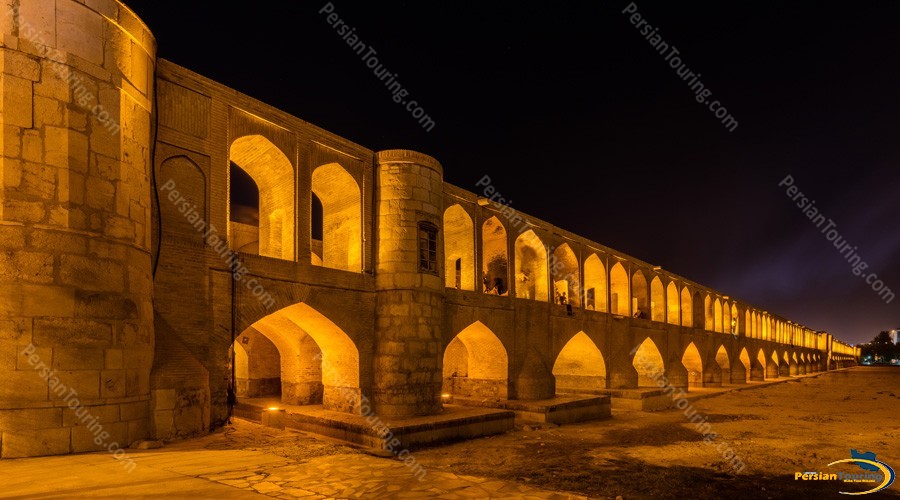
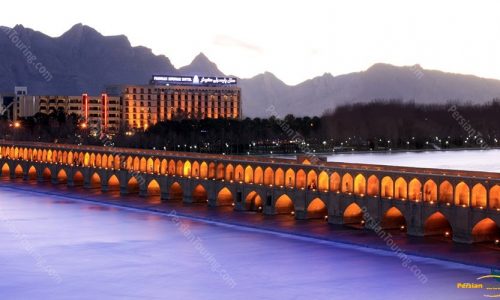
Si-o-see Pol Bridge is a stone double-deck arch bridge in Isfahan, Iran. It is also called Siose Bridge (which in Persian means “33 Bridge” or “Bridge of 33 Arches”) or Allah-Verdi Khan Bridge. Si-o-see Pol Bridge is built by the chancellor Allahverdi Khan Undiladze on commission from Shah Abbas whose chancellor he was.
Construction of the bridge began in 1599 and ended 1602. The bridge is long 298 meters and wide 13.75 meters. It has 33 spans from which it gets its name with the longest span of 5.6 meters, crosses Zayandeh River and is located at the southern end of Chahar Bagh Avenue.
The bridge has a large plane at the beginning of the bridge where Zayandeh River flows faster. There it has more arches making with that a suitable place for a tea house that can be accessed from the southern bank. There are two levels of arches. Lower level has 33 arches while upper has two arches above lower lever arch and one arch above the pier. The road that goes on the upper level is bounded by two high walls that protect travelers from winds and pedestrians that can walk there, from falling.
Si-o-see Pol Bridge is considered largest Iranian construction on the water.
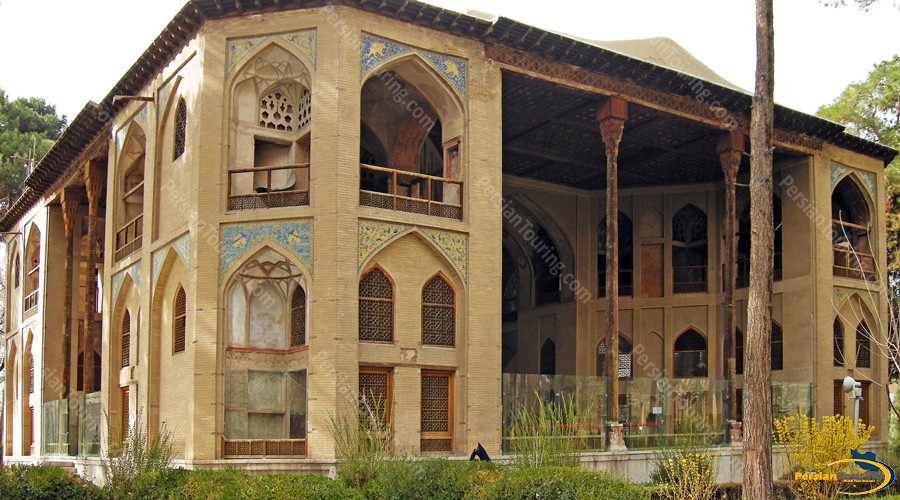
Hasht Behesht, meaning “Eight Heavens” is a Safavid era palace in Isfahan, Iran.
It was built in 1669 and is today protected by Iran’s Cultural Heritage Organization. Of more than forty mansions which existed in Isfahan during the rule of Safavids, this is the only one left today.
In a dry city which is located at the edge of the desert, with long hot summer, Gardens and streams of waters, beautiful roses, shades of trees, the sound of birds and Nightingales play a great role in our lives. In a great part of Iranian literature, especially poems, gardens are beautiful parts of our lives. In holy Quran, several verses of this holy book talk about paradise, full of green trees, pure and fresh streams of water, and another blessing of Almighty Allah is promised. Gardens are a small symbol of the promised paradise. Thanks to Zayandeh Rud River which has created a green ring in the neighborhood of desert.
The Hasht Behesht Palace was built in the center of Baghe Bolbol (The Nightingale Garden) dates back to 1660. The palace is the most important building which was built during Shah Suleiman Safavid time. The palace experienced new styles of stucco work and stained glass and mirror works.
Hasht Behesht was renovated by Fathali Shah Qajar in the 19th century. It was used as a residential palace by Zele Sultan (Fathali Shah’s son). This useless man even did not maintain ornamentations of the palace.
Chahar Taghi is a type of Sassanid and pre – Islamic architecture, but the style was beautifully developed and enlarged at the time of Safavid dynasty. The structure has octagonal shape and this kind of shape can be seen in various part of it. It is two story palaces which have been seriously damaged.
During hot summer days, circulation of air and the wind, cooled by surrounding water streams and beautiful plane, and sycamore trees created a nice comfortable environment for residents.
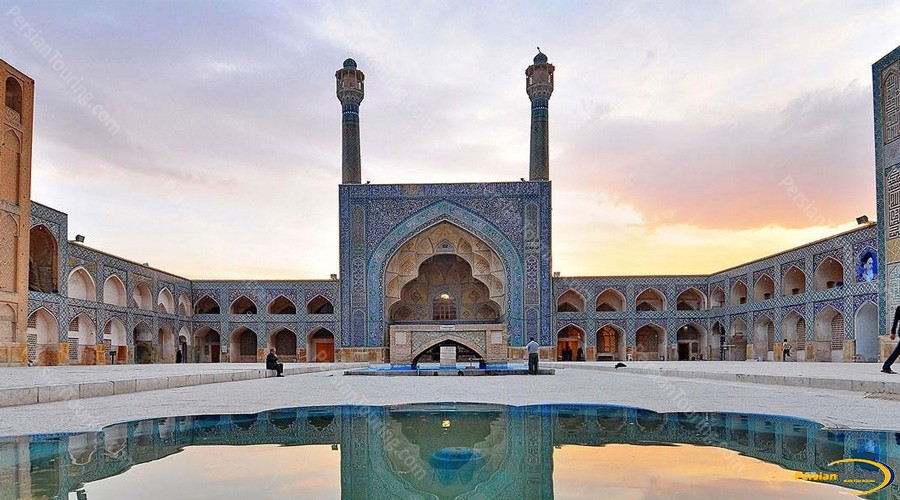
In Islamic countries, in every city, there is a congregational mosque. In fact, the most important mosque in each city is called the Jame mosque. Friday sermon or prayer is recommended to Shiites and congregational mosques in towns and cities are used for the Friday sermons. In metropolitan cities, vast areas have been allocated for this purpose.
Masjede Jame in Isfahan is the most remarkable mosque in Isfahan. It is an encyclopedia of Iranian and Islamic art and architecture. Step by step development of Iranian art and architecture can be seen in this complex. It takes at least half a day to visit different parts of it. The complex shows various structures from different centuries which date back from the 10th century to 18th century.
The oldest part was built on top of a Sassanid fire temple which belonged to Zoroastrians. The first part of the mosque dates back to 8th century. The second mosque or part belonged to 1030.
During Buyid dynasty in 908- 932 one of the oldest sections was built. During Buyid a courtyard surrounded by several prayers- halls were built. In later centuries changes took place in the mosque.
Saheb Ibn Ebad was a learned minister of Buyid dynasty who lived in Isfahan and played a great role in Isfahan development. The Seljuk dynasty expanded the mosque in the 11thcentury.
The game mosque shows specifications of Iranian mosques. It has a courtyard and there are four major Evans (grand- arches). It has one of the largest courtyards in Iran.
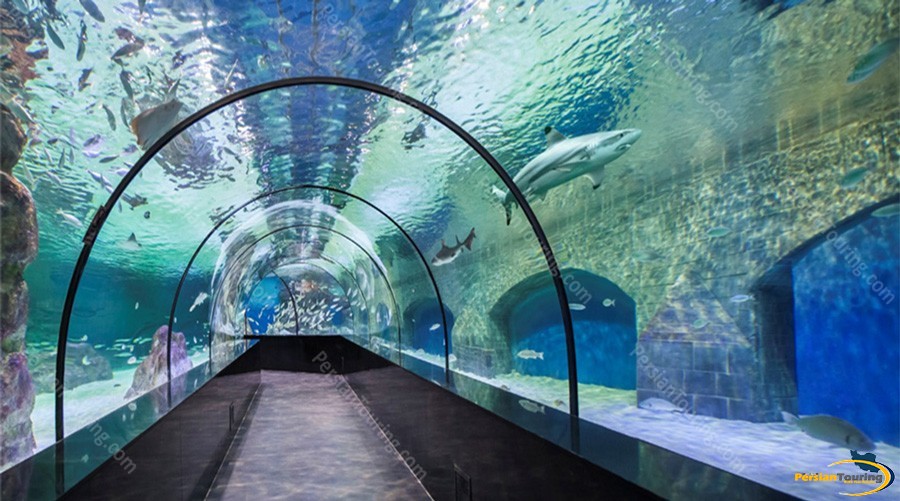
Isfahan Aquarium Tunnel is the biggest Aquarium Tunnel located in Iran. this attraction located in Navan Natural Park in the east of Isfahan.
This can make some new looks to Isfahan historical city.
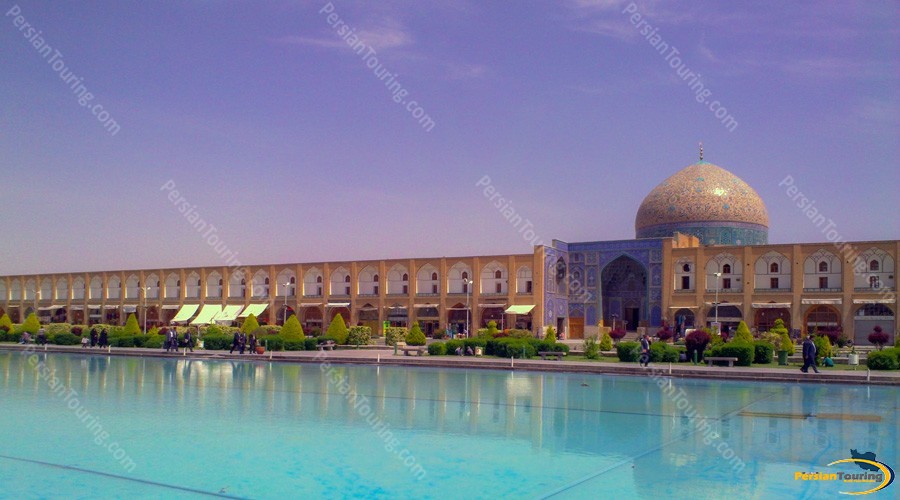
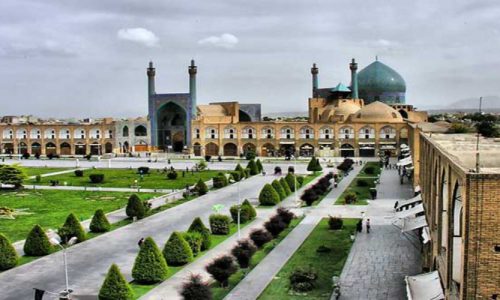
Sheikh Lotfollah Mosque is one of the architectural masterpieces of Safavid Iranian architecture, standing on the eastern side of Naghshe Jahan Square, Isfahan, Iran.
The mosque was built in 1619 by the chief architect Shaykh Bahai and ordered by first Shah Abbas.
A masterpiece of world’s architecture was built during the reign of Shah Abbas the Great. Sheikh Lotfollah was one of Shiite prominent, preachers and clergies who came from Jabal Amel in Lebanon to Isfahan. The Shah Abbas supported him and the Sheikh took up residence in Isfahan and the Sheik Lotfollah mosque was named after him. The mosque was used as a Theological school and also as a royal mosque. It was started to be built in 1602 and it was completed in 1619. First, the portal was built to complete the Maidan, to be a part of great Naghshe Jahan Square and it is said it was used as a private mosque for the Shah and the royal family. The plan and layout of the mosque are different from other four Evans Iranian mosques.
The entry gateway, like other buildings in Naghshe Jahan Square, the Grand Bazaar, and the Masjid-e Shah, was a recessed half-moon. Also, like in the Masjid-e Shah, the lower facade of the mosque and the gateway is constructed of marble, while the haft-rangi tiles decorate the upper parts of the structure. Creation of the calligraphy and tiles, which exceed, in both beauty and quality, anything created beforehand in the Islamic world, was overseen by Master calligrapher Ali Reza Abbasi.
It is rather a small mosque without courtyard and minarets, but the interior and exterior ornamentations are unbelievable for visitors.
The entrance of the mosque is located opposite of Ali Qapu Palace. As soon as we enter the mosque, we pass through a dim- lit corridor which is connected to the sanctuary of the mosque. The mentioned corridor was built for two purposes. First, when entering the sanctuary our face will be in direction of Mecca (Qiblah). The second light outside the mosque is sharp and strong, but in the main parts (sanctuary) light is dim. Passing through the dim- lit corridor for few seconds, our eyes will be adjusted to the dim light and when we enter the main part, we will be able to see the glory and beauty of the mosque as real as possible.
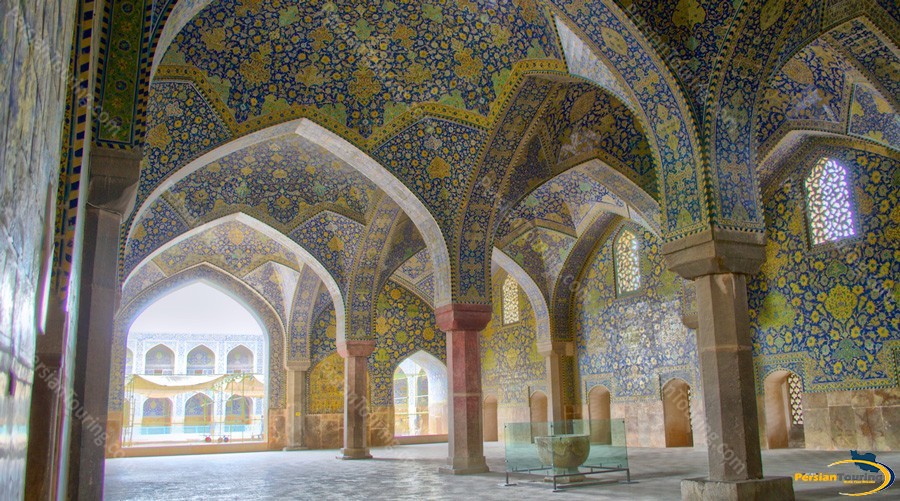
Shah Mosque with the alternative names of Jameh Mosque, Soltani Mosque, and Imam Mosque is one of the mosques in Naghsh-e Jahan Square in Isfahan which was built in Safavid era and is considered one of the important Iranian-Islamic architectural buildings. This building is an immortal masterpiece in architecture, tiling, and carpentry of the eleventh Hijri century. Shah Mosque was registered in the list of Iran’s national monuments on 15th Dey 1310 with number 107.
Imam Mosque is located on the south side of Naghsh-e Jahan Square and is one of the prominent architectural monuments in Iran in terms of its architectural properties, rich decorations, and other invaluable parts. As it can be inferred from the sources, its building began to be built in the third stage of Naghsh-e Jahan Plan to the order of Shah Abbas the Great (996-1038 Hijri/1588-1629) and was finished in Safavid period (1038-1052 Hijri/1629-1642).
Persian Touring reservations
Enter the reference from your booking email.
Get Social