Esteghbal Hotel Tabriz
Booking Esteghbal Hotel Tabriz with Persian Touring. Special price with discount. Start from 31$ per night
MORE
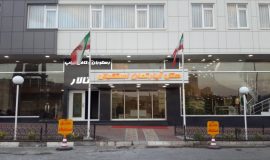
Booking Esteghbal Hotel Tabriz with Persian Touring. Special price with discount. Start from 31$ per night
MORE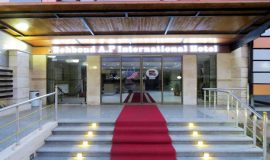
Booking Behboud Hotel Tabriz with Persian Touring. Special price with discount. Start from 21$ per night
MORE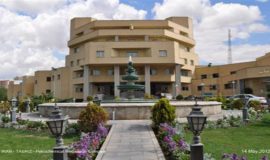
Booking Petrochemical Recreation Complex Tabriz with Persian Touring. Special price with discount. Start from 42$ per night
MORE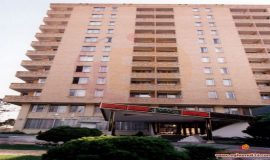
Booking Gostaresh Hotel Tabriz with Persian Touring. Special price with discount. Start from 60$ per night
MORE
Booking International Hotel Tabriz with Persian Touring. Special price with discount. Start from 38$ per night
MORE
Booking Laleh Kandovan International Rocky Hotel with Persian Touring. Special price with discount. Start from 61$ per night
MORE
Booking Shahryar International Hotel Tabriz with Persian Touring. Special price with discount. Start from 61$ per night
MORE
Booking El-Goli Pars Hotel Tabriz with Persian Touring. Special price with discount. Start from 48$ per night
MORE
Booking Kaya Laleh Park Hotel Tabriz with Persian Touring. Special price with discount. Start from 73$ per night
MORE
The Bazaar of Tabriz is a historical market situated in the city center of Tabriz, Iran. It is one of the oldest bazaars in the Middle East and the largest covered bazaar in the world. and is one of Iran’s UNESCO World Heritage Sites.
Tabriz Historic Bazaar Complex, located along one of the most frequented east-west trade routes, consists of a series of interconnected, covered brick structures, buildings, and enclosed spaces for a variety of functions – commercial and trade-related activities, social gatherings, and educational and religious practices. Closely interwoven with the architectural fabric is the social and professional organization of the Bazaar, which has allowed it to function over the centuries and has made it into a single integrated entity.
Tabriz Historic Bazaar Complex has been one of the most important international places for commercial and cultural interchange, thanks to the centuries-old east-west trading connections and routes and to a wise policy of endowments and tax exemptions.
Tabriz Historic Bazaar bears witness to one of the most complete socio-cultural and commercial complexes among bazaars. It has developed over the centuries into an exceptional physical, economic, social, political, and religious complex, in which specialized architectural structures, functions, professions, and people from different cultures are integrated into a unique living environment. The lasting role of the Tabriz Bazaar is reflected in the layout of its fabric and in the highly diversified and reciprocally integrated architectural buildings and spaces, which have been a prototype for Persian urban planning.
MORE
Armenian Monastic Ensembles of Iran, in the northwest of the country, consists of three monastic ensembles of the Armenian Christian faith: St Thaddeus and St Stepanos and the Chapel of Dzordzor. These edifices – the oldest of which, St Thaddeus, dates back to the 7th century – are examples of the outstanding universal value of the Armenian architectural and decorative traditions. They bear testimony to very important interchanges with the other regional cultures, in particular, the Byzantine, Orthodox, and Persian. Situated on the south-eastern fringe of the main zone of the Armenian cultural space, the monasteries constituted a major center for the dissemination of that culture in the region. They are the last regional remains of this culture that are still in a satisfactory state of integrity and authenticity. Furthermore, as places of pilgrimage, the monastic ensembles are living witnesses of Armenian religious traditions through the centuries. of Iran, in the northwest of the country, consists of three monastic ensembles of the Armenian Christian faith: St Thaddeus and St Stepanos and the Chapel of Dzordzor. These edifices – the oldest of which, St Thaddeus, dates back to the 7th century – are examples of the outstanding universal value of the Armenian architectural and decorative traditions. They bear testimony to very important interchanges with the other regional cultures, in particular, the Byzantine, Orthodox, and Persian. Situated on the south-eastern fringe of the main zone of the Armenian cultural space, the monasteries constituted a major center for the dissemination of that culture in the region. They are the last regional remains of this culture that are still in a satisfactory state of integrity and authenticity. Furthermore, as places of pilgrimage, the monastic ensembles are living witnesses of Armenian religious traditions through the centuries.
Armenian Monastic Ensembles of Iran have borne continuous testimony, since the origins of Christianity and certainly since the 7th century, to Armenian culture in its relations and contact with the Persian and later the Iranian civilizations. They bear testimony to a very large and refined panorama of architectural and decorative content associated with Armenian culture, in interaction with other regional cultures: Byzantine, Orthodox, Assyrian, Persian, and Muslim. The monasteries have survived some 2,000 years of destruction, both of human origin and as a result of natural disasters. They have been rebuilt several times in a spirit in keeping with Armenian cultural traditions. Today they are the only important vestiges of Armenian culture in this region. Saint-Thaddeus, the presumed location of the tomb of the Apostle of Jesus Christ, St. Thaddeus, has always been a place of high spiritual value for Christians and other inhabitants in the region. It is still today a living place of pilgrimage for the Armenian Church.
Criterion (ii): The Armenian monasteries of Iran illustrate the Outstanding Universal Value of Armenian architectural and decorative traditions. They bear testimony to very important cultural interchanges with the other regional cultures, in particular, Byzantine, Orthodox and Persian.
Criterion (iii): Situated at the south-eastern limits of the main zone of Armenian culture, the monasteries were a major center for its diffusion in the region. Today they are the last regional testimony of this culture in a satisfactory state of integrity and authenticity.
Criterion (vi): The monastic ensembles are the place of pilgrimage of the apostle St. Thaddeus, which bears an outstanding living testimony to Armenian religious traditions down the centuries.
The State Party has made a remarkable long-term effort regarding the restoration and conservation of the Armenian monastic ensembles in Iran. Their integrity and authenticity are satisfactory, and this includes the Chapel of Dzordzor, which (because of a dam construction project) was moved and then rebuilt with an evident concern to retain authenticity.
The legal protection in place is adequate. The monastic ensemble is currently in a good state of conservation. The management plan provides the necessary guarantees for the long-term conservation of the property and the expression of its Outstanding Universal Value.
Persian Touring reservations
Enter the reference from your booking email.
Get Social