Taktaku Guesthouse Isfahan
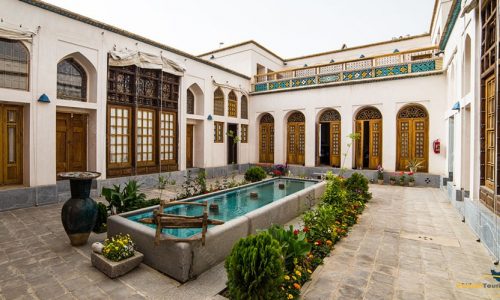
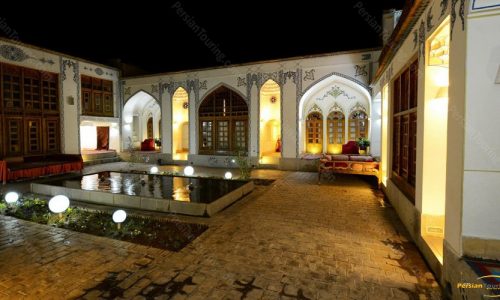
Booking Tak Taku Guesthouse Isfahan with Persian Touring. Special price with discount. Start from 21$ per person
MORE
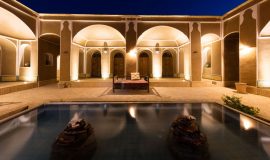
Booking Tak Taku Guesthouse Isfahan with Persian Touring. Special price with discount. Start from 21$ per person
MORE
Booking Iran Hotel Isfahan with Persian Touring. Special price with discount. Start from 20$ per night
MORE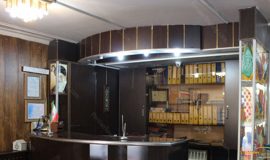
Booking Mehr Hotel Isfahan with Persian Touring. Special price with discount. Start from 34$ per night
MORE
Booking Kaveh Hotel Isfahan with Persian Touring. Special price with discount. Start from 13$ per night
MORE
Booking Tooba Hotel Isfahan with Persian Touring. Special price with discount. Start from 20$ per night
MORE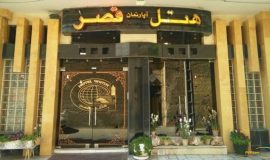
Booking Ghasr Hotel Isfahan with Persian Touring. Special price with discount. Start from 28$ per night
MORE
Booking Karoon Hotel Isfahan with Persian Touring. Special price with discount. Start from 14$ per night
MORE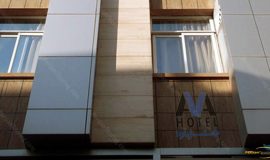
Booking Ava Hotel Isfahan with Persian Touring. Special price with discount. Start from 14$ per night
MORE

This mosque is located in “Ashtargan” Village in Lenjan County that is today pronounced as “Ashtarjan” and is 38 kilometers from Isfahan. Its portal is 13 meters high and it is decorated by tiles according to the style of early eighth Hijri century and the moldings are also in that style.
Its minarets are mobile as those in Menarjonban and the date of its construction is recorded on tiling inscriptions of the main portal and at the end of the inscription inside the dome; the recorded date is 715 Hijri year. The founder of the mosque building whose name is explicitly on the main portal inscription is “Fakhr al-Din Mohammad Ibn Mohammad Ashtarjani”.

Shaykh Bahai was one of the greatest Safavid scientists, who was a master in philosophy, logic, commission, and mathematics and his compilations that are remaining are about 88 books and dissertations. He who was buried according to his will beside the tomb of Hazrat Ali Ibn Musa al-Reza (AS) was known in public for his skills in mathematics, architecture, and engineering.
The architecture of Imam Mosque in Isfahan and Hesar Najaf, construction of solar clock in Imam Reza Shrine and most important of all construction of a bath that had occupied the minds of all Iranian and people in the world are engineering and architectural activities that have been attributed to Shaykh Bahai.
This bath is located 100 meters from Nizam al-Mulk Dome (southern part of Atigh Jameh Mosque) in “Dar Dast” Neighborhood. Although it has Safavid bath features, in historical views, it is known as the mysterious bath for the water inside it used o become warm without direct energy. In other words, the thermal system of this bath is one of the engineering masterpieces using physics and chemistry rules.
It is noteworthy that construction of Shaykh Bahai Hammam was registered in the list of Iran’s national monuments on 29th of Tir 1377 with registration number 2063 and the building was used for 20 years as a bath.

Marnan Bridge is one of the oldest bridges I Isfahan equal to Ji and Shahrestan Bridge that not much time has passed since its publication but some foundations of the bridge are ascribed to Sassanid era. The bridge has 17 openings at the moment that according to the historians, there were even more in the past.
This bridge is also called Sarfaraz and its appellation is that one of the rich religious minorities built or repaired it at Shah Soleiman Safavid time and then it was called Sarfaraz and was known as Sarfaraz for some time.

The oldest monument from ancient times exists in Isfahan and it is a monument similar to a fire temple that is located on Isfahan Road to Najafabad near Menar Jonban on top of a rocky hill.
Most of Islamic historians such as Ibn Khordadbeh, Hamdollah Mostofi and Ibn Hawqal have referred to this monument and called it a fire temple. Foreign scientists as well have studied and investigated the fire temple and Maxime Siroux and Andre Godard from France are some of them.
The important feature of this monument is the bricks building the current ruined fire temple that few monuments have such bricks in terms of their size. According to experts, these bricks are made of mortar and mud with small pebbles. They used to also add the reeds around Zayandeh Rood to add to its stability.
The building of this monument is considered to be even before Sassanid era. Studies conducted by IZMEO announce that the building dates back to Elam Civilization.
This is also in line with studies and investigations conducted on fire temples remaining from Sassanid era in Natanz, Kashan, Yazd, Azerbaijan and Nain because fire temples would not be built on top of mountains or hills at the time but in places more easily accessible. Therefore, it can be claimed with certainty that Isfahan Fire Temple is a sign of more ancient civilizations than Sassanid era and dynasties before it.
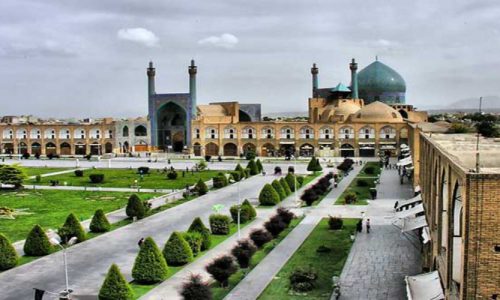


Ashraf Hall is from Safavid era located in Ostandari Street, Sepah Street in Isfahan. The monument was registered on 15th of Dey 1310 with registration number 106 as one of Iran’s national monuments.
The mansion known as Ashraf Hall is remaining from Safavid palaces that had formed a set of glorious palaces of that time along with other places like the Roofed Hall, Eight Paradise Palace, Posht-e Matbakh (Behind the Kitchen) Palace, Rakib Khaneh, and Timurid Hall.
The word “Ashraf” has made some people call the mansion “Ashraf-e Afghan”. However, researchers’ studies indicate the fact that “Ashraf Hall” was built at Shah Abbas II time and was completed at his successor’s time, Shah Soleiman.
This gilding monument is highly glorious in terms of decorations, paintings, beautiful Mogharnases, moldings and arch Tags.
Seyyed Mosque is the greatest and most famous mosque in Isfahan that was built in thirteenth Hijri century to the order of Hojjat al-Islam Haj Seyyed Bagher Shafti, one of the great scholars of Imamieh who was living at the reign of Mohammad Shah Qajar.
Light red color plays a crucial role in tile works of vase and landscape designs and this is the color that can also be seen in other mosques of Qajar era like Rahim Khan Mosque and Rokn al-Molk Mosque.
The tomb of Seyyed Hojjat al-Islam that was built very gloriously and luxuriously is located in the north eastern of the scene of the mosque. Different dates from 1255 to 1311 Hijri can be seen in this mosque whose inscriptions are done by Mohammad Bagher Sharif Shirazi. The decorations inside the dome include moldings, mirror works and geldings that along with the silver and gold Inlayed Zarih and very beautiful calligraphists are visit-able parts of the mosque.

Hakim Mosque in Isfahan is located at the end of dyers bazaar and was built in Shah Abbas II time by his physician, Hakim Mohammad Davoud, in remains of Jurjir Jameh Deilami Mosque or Saheb al-Zaman Ismail Ibn Ibad Mosque from the fourth Hijri century.
Portal manuscripts and the interior porches of the mosque are from 1067-1073 Hijri years and they were written by Mohammadreza Imami, the famous calligrapher of Safavid time. Jurjir Mosque portal is in the north-west of the mosque.
Jurjir Deilami Mosque used to be called “Saghir Jameh Mosque” and it used to be a beautiful and elegant mosque at the second half of the fourth Hijri century.
This mosque was registered in 1313 as a national monument with registration number 223.

This portal is owned by “Kafi al-Kafah” Mosque (owner of Ismail Ibn Ibad, one of the famous ministers of Deilami kings at fourth Hijri century) which was taken out of mud walls and repaired in Mordad 1335.
This portal is historically and religiously highly valuable because it is the only monument left of the period when Isfahan was the capital of Buwayhid kings. This portal located in the north-west of Hakim Mosque is one of the very old and highly artistic examples of brickwork and molding in Isfahan.
Chaharbagh School which is also called Soltani School and Madar Shah School is the last glamorous historical monument of Safavid reign in Isfahan that was built in 1116-1126 Hijri to teach and train religious students in Shah Sultan Hussein period, the last Safavid king. Chaharbagh School that according to some people has been a school and a mosque at the same time is located in the eastern side of Chaharbagh Street with an area of 8500 square meters.
In terms of architectural fitness and beauty of Tilings, the dome of Chaharbagh Schoolis rated second after Sheikh Lotf al-Allah Mosque. However, in experts’ idea, the luxurious gate of this building which is ornated by gold and silver is a masterpiece in fine industries and is a unique structure in terms of goldsmith, gilding, design and etching. Chaharbagh School is also significant in terms of Tilings and includes different types of this art such as seven colored tiling, Sudoriferous, Chinese knot, Pillay and Magheli and is in fact the tiling museum in Isfahan. This place is the tile collection in Iran.
The integrated marble altar and pulpit, especial chamber of Suktan Hussain King, unique tiling of the school entry, Nastaliq calligraphy on the inscriptions and wooden carved windows are the very interesting and spectacular parts of this precious historical monument. The architecture of Chaharbagh School is in Isfahanian Style.the peak of education in this school was at Safavid era and after that time it took a descending path.
This monument was registered in the list of national monuments in 1310 with registration number 116.
Persian Touring reservations
Enter the reference from your booking email.



Get Social