Rose Hotel Kashan
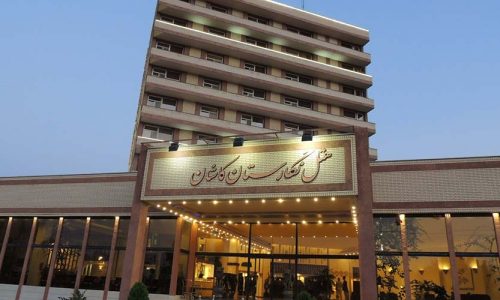
Booking Ariana Hotel Kashan with Persian Touring. Special price with discount. Start from 22$ per night
MORE

Booking Ariana Hotel Kashan with Persian Touring. Special price with discount. Start from 22$ per night
MORE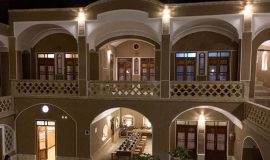
Booking Noghli Hotel Kashan with Persian Touring. Special price with discount. Start from 15$ per night
MORE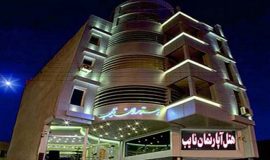
Booking Nayeb Apartment Hotel Kashan with Persian Touring. Special price with discount. Start from 55$ per night
MORE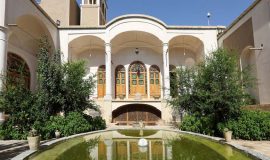
Booking Morshedi House Hotel Kashan with Persian Touring. Special price with discount. Start from 50$ per night
MORE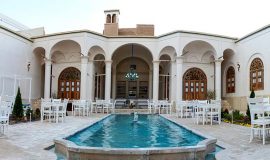
Booking Ariana Hotel Kashan with Persian Touring. Special price with discount. Start from 37$ per night
MORE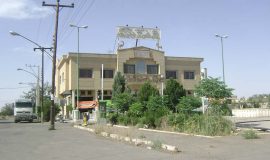
Booking Kowsar Hotel Kashan with Persian Touring. Special price with discount. Start from 24$ per night
MORE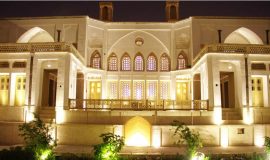
Booking Ehsan Traditional Hotel Kashan with Persian Touring. Special price with discount. Start from 24$ per night
MORE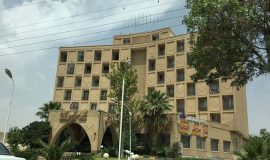
Booking Amir Kabir Hotel Kashan with Persian Touring. Special price with discount. Start from 34$ per night
MORE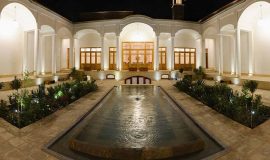
Booking Darbe Bagh Hotel Kashan with Persian Touring. Special price with discount. Start from 50$ per night
MORE
Fin Garden of Kashan is an Iranian garden in which there is also Fin Bathroom. The bathroom is the place where Amir Kabir, the chief minister, was murdered in 1852 AD at the instigation of Naser al-Din Shah Qajar. Fin Garden is one of the most important Iranian garden which is still lively and full of life.
Among important historical events happened in this garden are the official coronation of Safavid Shah Ismail and Amir kabir’s murder. National Museum of Kashan is aslo located in Fin Garden.
Alongside Naghsh-e Jahan Square and Chehel Sotoun Palace, Fin Garden has the most visitors and tourists in Isfahan Province.
Fin garden was registered in Iran’s National Heritage on December 7, 1935 under the registration number of 238. It has been some years that it is registered in UNESCO World Heritage.

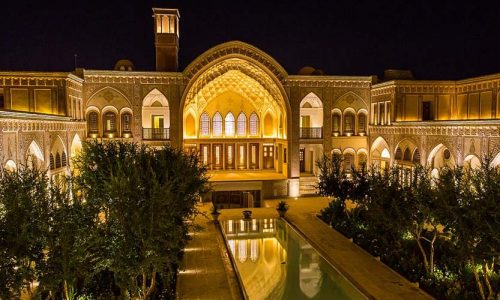
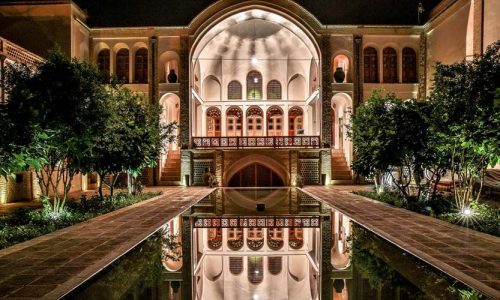
800-year-old Kashan’s Ameri House with an area of 9000 square meters building site and 12000 square meters standing property, houses 85 rooms and 7 courtyards.
It is the largest historical house in Iran. This house has the highest wind catcher among other wind catchers of Kashan’s houses. Ameri House has been bequeathed to the private sector and it is currently used as the biggest traditional house-hotel in Iran.
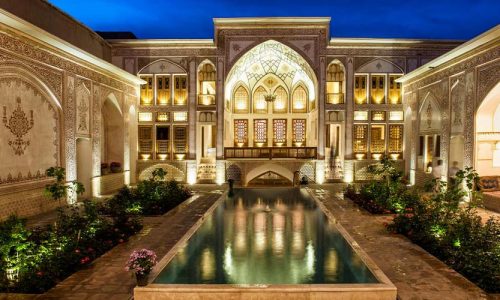
It is noteworthy that Ameri House-Hotel, Manuchehri House, and Iranian House are among the top 25 places of residence in the Middle-East.

The said premises is located in Kashan and was constructed during the years 1292-1310 AH. by ‘Haj Seyed Jaffar Natanzi’ a merchant who conducted business in Borujerd and Kashan as well. He constructed this house in order to evade religious levies. The entrance to the premises is from an octagonal vestibule and an area utilized by pageboys adorned with a number of multilateral crescents and skylights in the ceiling. Then a long corridor leads to the northern facade of the building.
Near the entrance is a five-door chamber with intricate plaster-work. This opens out on a large and roof less porch, capturing the warmth of the sun, and transferring the same to the small symmetrical chambers on either side of this porch. In the northeastern portion of the structure are the kitchen quarters, arranged with shelves, and a special area to provide space for china and other utilities. Whereas in the western and eastern sections are chambers and covered porches. Opposite which is a courtyard and a stairway connecting the main premises to the basement.
The basement covers a vast area and is tastefully arranged with wide wall cupboards with carved and lattice worked wooden doors. On either side of the building is the main or entrance staircase leading to the southern part of the structure. Here there is a large porch with a high ceiling giving way to an entertainment hall. Behind which, on a lower level is an octagonal area with a pool or the ‘hauz khaneh’.
The same has a domed shaped roof and beautiful skylights. Here the ceiling is vaulted and worked with tiles in harmonious colors. On the walls, portraits of the Qajar sovereigns can be noted, with their guards in formal European apparel. This building is also equipped with cellars that are cool and pleasant for use in the heat of summer. Materials used in the construction of this structure are, stone, brick, sun baked bricks and a composition of clay, straw and mortar.

This tomb lies to the west of the city of Kashan and near the large cemetery of the city. This tomb retained its simplicity according to the wish of the deceased, till recent years when certain renovations were performed.

In this aggregate a small and a large bath are present. The ceilings adorned with paintings and fine marble columns are artistic affects here. The smaller bath has gained historical fame due to the assassination of Amir Kabir in this place.

This famous personality, a poet of the Safavid era has been laid to rest in Kashan. The small dome of the mausoleum is decorated in tiles, and the ceiling of the mausoleum is adorned with beautiful paintings.
On the walls, verses from his poems have been inscribed in white on a navy blue back ground, in the ‘Nastaliq’ script.

The said cave dates to approximately 2000 years ago and nestles in the limestone hills overlooking the Niyasar Village of Kashan. This cave has been dug out with the help of primitive implements and resembles a meandering stony tunnel in the breast of the Karkas Mountains. The same comprises of long and narrow passages, several chambers and wells. It is well worth mentioning that appropriate gear is required to gain access to this vicinity.
The Niyasar Cave is in three floors, and has a number of wells. Its passages and chambers cover approximately 500 square meters. The underground tunnels or passages are less than one square meter in area, and in some locations measure 100 x 70 sq. cm. Vertically 45 wells are connected to each other at an average depth of 118 m. This cave has four entrances and is of two separate sections.
The central sector comprises of seven chambers in variable heights and very skillfully carved out.
The same is connected to the floor beneath by the wells and halls. The other portion is a lengthy passage with a gradual incline and is connected to other wells, this ends in a beautiful hall. At the extreme end of this sector is a large area with several dug out chambers. The Niyasar Cave has 20 chambers, the largest of all being 28.6 sq. m. and the smallest 1.8 sq. m.

Approximately 4,500 years BC., a community with an interesting civilization was settled in this area and their tools were of stone and bone.
There is a possibility that the former residents of this region had succumbed to their successors. Here, Elamite slabs of clay have been found, and due to the links of this community with that of the civilization of Shoosh (Susa), about 5,500 years ago, they learned to write. Thereby, several clay slabs with the most ancient Elamite script are vestiges of this area. Evidences found in the cemetery between the two hillocks are related to the fresh immigrants to the Silk Hill, which bears a strong resemblance to the discoveries in the Giyan Hillock of Nahavand and Khordin of Savoj Bollaq.

This mausoleum consists of a courtyard, porch and conical dome decorated with turquoise colored tiles. The primary date of construction of this dome is unknown, but the date 777 AH. can be observed on the tomb stone. The said tomb is located beyond the Fin gateway.
Persian Touring reservations
Enter the reference from your booking email.






Get Social