Baba Taher Hotel Hamadan
Booking Baba Taher Hotel Hamadan with Persian Touring. Special price with discount. Start from 65$ per night
MORE
Booking Baba Taher Hotel Hamadan with Persian Touring. Special price with discount. Start from 65$ per night
MOREBooking Amiran Hotel 2 Hamadan with Persian Touring. Special price with discount. Start from 34$ per night
MOREBooking Katibeh Hotel Hamadan with Persian Touring. Special price with discount. Start from 40$ per night
MOREBooking Safir Hotel Hamadan with Persian Touring. Special price with discount. Start from 32$ per night
MOREBooking Alisadr Tourist Hotel Hamadan with Persian Touring. Special price with discount. Start from 25$ per night
MOREBooking Varzesh Guesthouse Hamadan with Persian Touring. Special price with discount. Start from 18$ per night
MOREBooking Khatam Hotel Hamadan with Persian Touring. Special price with discount. Start from 24$ per night
MOREBooking Amiran Hotel 1 Hamadan with Persian Touring. Special price with discount. Start from 34$ per night
MOREBooking Parsian BuAli Hotel Hamadan with Persian Touring. Special price with discount. Start from 37$ per night
MORE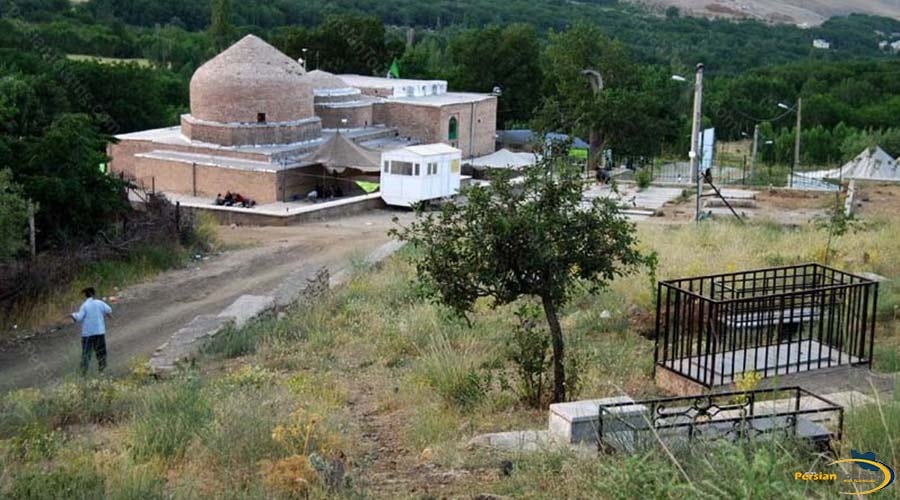
This village is near Hamadan, in the district of Maryanaj in an elevated region. It has moderate summers and cold winters. “Vafr” in Kurdish means snow. In this village is the tomb of Imamzadeh Mohsen, (a descendant of Imam Hassan A.S.) In this vicinity is the tomb of one of the disciples of the Prophet (PBUH). The structure of this Imamzadeh is unique from the architectural aspect.
It has been constructed of brick, and its dome, place for nocturnal prayers and courtyard are its interesting features .This Imamzadeh is also known as Imamzadeh Kooh. The village has a pleasant view and also has a spring.
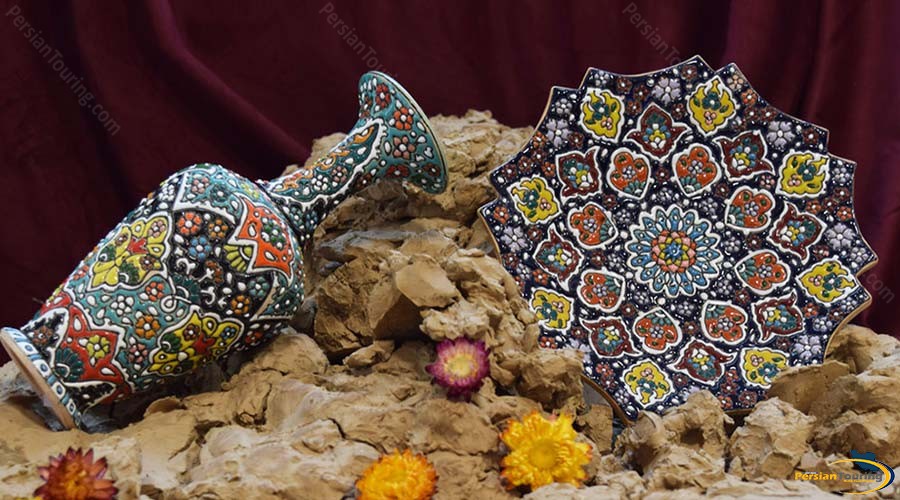
The most important handicraft of the province is earthenware and ceramics, and a place called ‘Lalejin’ (30 km. north of Hamadan) is famous for this handicraft. Besides earthenware and ceramics, there are the followings-carpet and ‘Kilim’ weaving (or a coarse carpet), clothing (mainly to do with the nomads), ‘jajeem’ (or a loosely woven woolen material), leather work, ‘geeveh’ (a local foot-ware), sweet-meats and grape syrup.
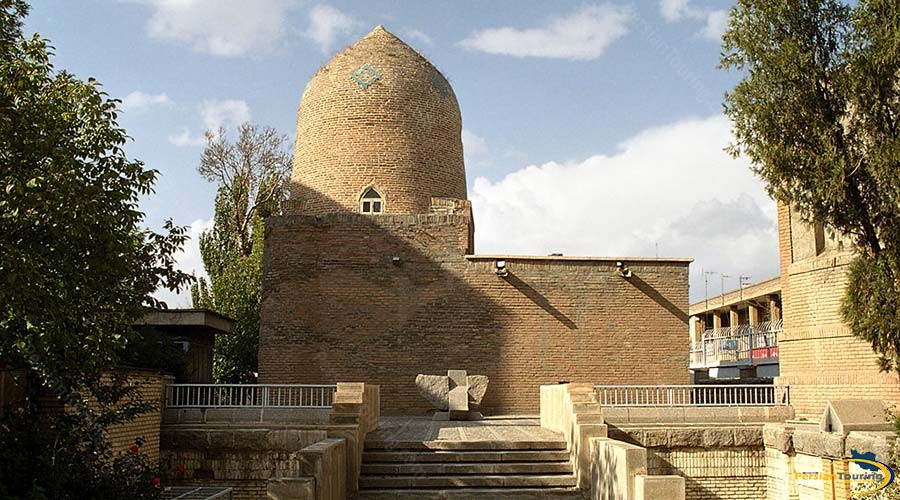
Tomb of Esther and Mordechai, Pronounce as Ester and Mardkhay monument or tomb is one of the most important shrines of the Jewish people of Iran and the world. This monument is registered as one of Iran’s cultural heritage relics. The existence of this shrine is an important factor in formation and persistence of Jewish society in Hamedan.
Ester and Mardkhay tomb is the second important shrine of the Jewish people of the world. It is a historical building which according to the documents of Britannica Encyclopedia relates to Purim holiday and to the second A.D. century.
The dome on the tomb was adopted from the style of Islamic buildings. Its construction materials include stone and brick which was built on an older building in the era of Sadrat Sa’d Al-Dowleh in the third Hijri century. Moreover, Jewish people used its surrounding land as a cemetery.
According to a historical narration, Xerxes I married a Jewish girl named Ester, who was the nephew of Mardkhay. Meanwhile, a person named Haman envied the power of Jews and demanded the massacre of Jews from Xerxes I. But Mardkhay changed the opinion of the king by the help of Ester and saved the Jewish people from massacre. Since then, Jewish people hold the Purim holiday ceremony in late Esfand and early Farvardin days in the jubilee of being saved from massacre.

Takht-e Soleyman, also known as Shiz or Azar Goshnasp, literally “the Fire of the Warrior Kings”, is an archaeological site in West Azarbaijan, Iran. It lies midway between Urmia and Hamadan, very near the present-day town of Takab, and 400 km west of Tehran.
The originally fortified site, which is located on a volcano crater rim, was recognized as a World Heritage Site in July 2003. The citadel includes the remains of a Zoroastrian fire temple built during the Sassanid period and partially rebuilt during the Ilkhanid period. This site got this Semitic name after the Arab conquest. This temple housed one of the three “Great Fires” or “Royal Fires” that Sassanid rulers humbled themselves before in order to ascend the throne. The fire at Takht-i Soleiman was called ādur Wishnāsp and was dedicated to the arteshtar or warrior class of the Sasanid.
Folk legend relates that King Solomon used to imprison monsters inside the 100 m deep crater of the nearby Zendan-e Soleyman “Prison of Solomon”. Another crater inside the fortification itself is filled with spring water; Solomon is said to have created a flowing pond that still exists today. Nevertheless, Solomon belongs to Semitic legends and therefore, the lore and namesake (Solomon’s Throne) should have been formed following the Arab conquest of Persia. A 4th-century Armenian manuscript relating to Jesus and Zarathustra, and various historians of the Islamic period, mention this pond. The foundations of the fire temple around the pond are attributed to that legend.
Archaeological excavations have revealed traces of a 5th-century BC occupation during the Achaemenid period, as well as later Parthian settlements in the citadel. Coins belonging to the reign of Sassanid kings, and that of the Byzantine Emperor Theodosius II (AD 408-450), have also been discovered there.
MOREPersian Touring reservations
Enter the reference from your booking email.
Get Social