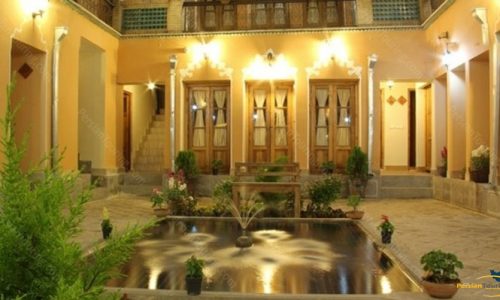
Saba Hotel Isfahan
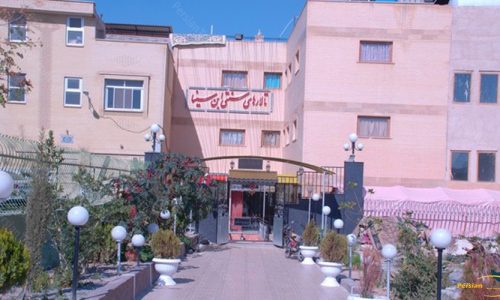
Booking Saba Hotel Isfahan with Persian Touring. Special price with discount. Start from 19$ per night
MORE

Booking Saba Hotel Isfahan with Persian Touring. Special price with discount. Start from 19$ per night
MORE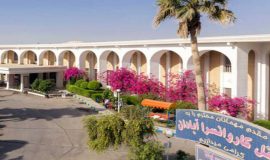
Booking Karvansara Hotel Abadan with Persian Touring. Special price with discount. Start from 35$ per night
MOREBooking Parsian Azadi Hotel Abadan with Persian Touring. Special price with discount. Start from 33$ per night
MORE
Sangan is a very beautiful mountain village located in the north west of Tehran, a little further from Souleqan and has a beautiful Imam Zadeh building and waterfall.
In this village, a medicinal plants museum has been established by one of the local residents which is worth visiting. This museum has approximately forty species of medicinal plants and one can visit it as the spring season begins.


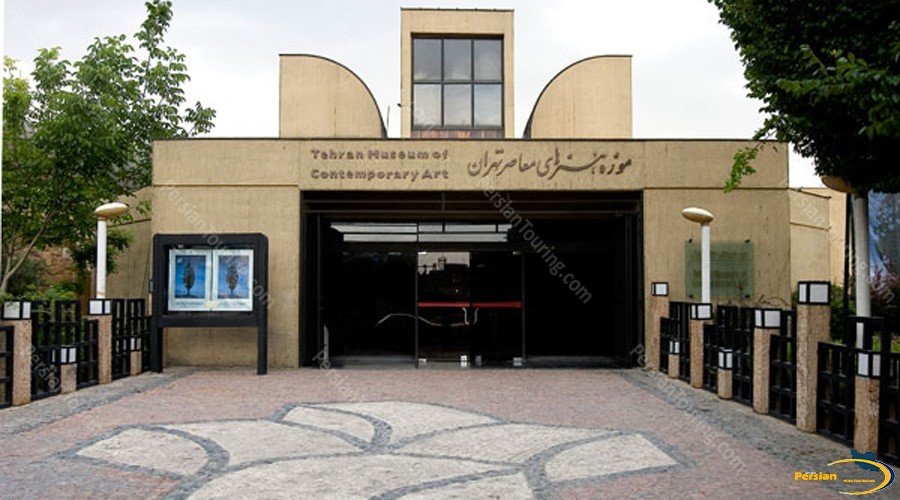
This museum began its cultural and art activities in 1356 on a land with an area of 2000 square meters and green and beautiful area known as Statue Park with valuable statues of Iranian famous contemporary artists.
Inspired by Iranian traditional architecture and philosophical concepts, the building of the museum is an invaluable and rare example of modern Iranian architecture.
The building is a combination of modern and traditional architectures inspired by wind-catchers of desert areas in Iran. The gallery of the museum holds different art exhibitions and whenever there is an exhibition on, one or two galleries are allocated to present treasures of the great artists in the world.

The same is located in the Zayar village, east of the city of Esfahan. It is beautifully adorned with brickwork coupled with turquoise glazed tiles lining the fringes and the panels of the minaret.
It is a relic of the Saljuqi era in the 6th century AH. There is a strong possibility that it takes the name of Zayar from the time of the rule of Mardavij Zayari, who ruled in the early 4th century in Esfahan.

Shahr-e Sukhteh is an archaeological site of a sizable Bronze Age urban settlement, associated with the Jiroft culture. It is located in Sistan and Baluchistan Province, the southeastern part of Iran, on the bank of the Helmand River, near the Zahedan-Zabol road. In July 2014 it was placed on the World Heritage List of UNESCO.
The reasons for the unexpected rise and fall of the Burnt City are still wrapped in mystery. Artifacts recovered from the city demonstrate a peculiar incongruity with nearby civilizations of the time and it has been speculated that Shahr-e-Sookhteh might ultimately provide concrete evidence of a civilization east of pre historic Persia that was independent of ancient Mesopotamia.
Shahr-e Sukhteh, meaning ‘Burnt City’, is located at the junction of Bronze Age trade routes crossing the Iranian plateau. The remains of the mudbrick city represent the emergence of the first complex societies in eastern Iran. Founded around 3200 BC, it was populated during four main periods up to 1800 BC, during which time there developed several distinct areas within the city: those where monuments were built, and separate quarters for housing, burial, and manufacture. Diversions in water courses and climate change led to the eventual abandonment of the city in the early second millennium. The structures, burial grounds and a large number of significant artifacts unearthed there, and their well-preserved state due to the dry desert climate, make this site a rich source of information regarding the emergence of complex societies and contacts between them in the third millennium BC.
Covering an area of 151 hectares, Shahr-e Sukhteh was one of the world’s largest cities at the dawn of the urban era. In the western part of the site is a vast graveyard, measuring 25 hk.s. It contains between 25,000 to 40,000 ancient graves.
The settlement appeared around 3200 BC. The city had four stages of civilization and was burnt down three times before being abandoned in 1800 BC.
The site was discovered and investigated by Aurel Stein in the early 1900s.
Beginning in 1967, the site was excavated by the Istituto Italiano per Africa e Oriente (IsIAO) team led by Maurizio Tosi. That work continued until 1978. After a gap, work at the site was resumed by the Iranian Cultural Heritage and Tourism Organization team led by SMS Sajjadi. New discoveries are reported from time to time.
MOREPersian Touring reservations
Enter the reference from your booking email.


Get Social