Oxin Hotel Ahvaz
Booking Oxin Hotel Ahvaz with Persian Touring. Special price with discount. Start from 38$ per night
MORE

Booking Oxin Hotel Ahvaz with Persian Touring. Special price with discount. Start from 38$ per night
MORE
Booking Persia Hotel Ahvaz with Persian Touring. Special price with discount. Start from 22$ per night
MORE
Booking Naderi Hotel Ahvaz with Persian Touring. Special price with discount. Start from 22$ per night
MORE
Booking Pars Hotel Ahvaz with Persian Touring. Special price with discount. Start from 58$ per night
MORE

Susa was an ancient city of the Elamite, First Persian Empire, Seleucid, and Parthian empires of Iran, and one of the most important cities of the Ancient Near East. It is located in the lower Zagros Mountains about 250 km east of the Tigris River, between the Karkheh and Dez Rivers.
The modern Iranian town of Shush is located at the site of ancient Susa. Shush is the administrative capital of the Shush County of Iran’s Khuzestan province. It had a population of 64,960 in 2005.
Susa was one of the most important cities of the Ancient Near East. In historic literature, Susa appears in the very earliest Sumerian records: for example, it is described as one of the places obedient to Inanna, the patron deity of Uruk, in Enmerkar and the Lord of Aratta.
Susa is also mentioned in the Ketuvim of the Hebrew Bible by the name Shushan, mainly in Esther, but also once each in Nehemiah and Daniel. Both Daniel and Nehemiah lived in Susa during the Babylonian captivity of the 6th century BCE. Esther became queen there, married to King Ahasuerus, and saved the Jews from genocide. A tomb presumed to be that of Daniel is located in the area, known as Shush-Daniel. The tomb is marked by an unusual white stone cone, which is neither regular nor symmetric. Many scholars believe it was at one point a Star of David. Susa is further mentioned in the Book of Jubilees as one of the places within the inheritance of Shem and his eldest son Elam; and in 8:1, “Susan” is also named as the son (or daughter, in some translations) of Elam.
Greek mythology attributed the founding of Susa to King Memnon of Aethiopia, a character from Homer’s Trojan War epic, the Iliad.
MORE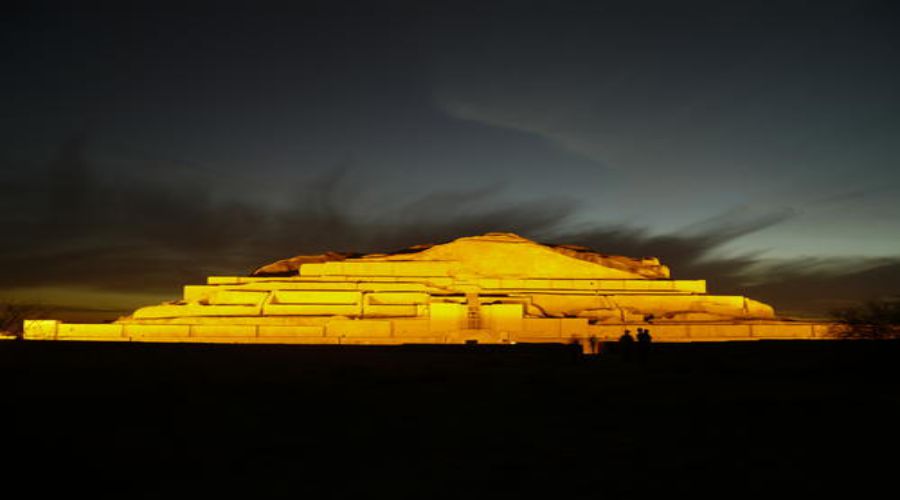
Chogha Zanbil is an ancient Elamite complex in the Khuzestan province of Iran. It is one of the few existent ziggurats outside of Mesopotamia. It lies approximately 42 km south-southeast of Dezful, 30 km southeast of Susa and 80 km north of Ahvaz.a
The ruins of the holy city of the Kingdom of Elam, surrounded by three huge concentric walls, are found at Tchogha Zanbil. Founded c. 1250 B.C., the city remained unfinished after it was invaded by Ashurbanipal, as shown by the thousands of unused bricks left at the site
Chogha in Bakhtiari means “hill”. Choga Zanbil means ‘basket mound. It was built about 1250 BC by the King Untash-Napirisha, mainly to honor the great god Inshushinak. Its original name was Dur Untash, which means ‘town of Untash’, but it is unlikely that many people, besides priests and servants, ever lived there. The complex is protected by three concentric walls which define the main areas of the ‘town’. The inner area is wholly taken up with a great ziggurat dedicated to the main god, which was built over an earlier square temple with storage rooms also built by Untash-Napirisha. The middle area holds eleven temples for lesser gods. It is believed that twenty-two temples were originally planned, but the king died before they could be finished, and his successors discontinued the building work. In the outer area are royal palaces, a funerary palace containing five subterranean royal tombs.
Although construction in the city abruptly ended after Untash-Napi Risha’s death, the site was not abandoned but continued to be occupied until it was destroyed by the Assyrian king Ashurbanipal in 640 BC. Some scholars speculate, based on a large number of temples and sanctuaries at Chogha Zanbil, that Untash-Napirisha attempted to create a new religious center (possibly intended to replace Susa) which would unite the gods of both highland and lowland Elam at one site.
The main building materials in Chogha Zanbil were mud bricks and occasionally baked bricks. The monuments were decorated with glazed baked bricks, gypsum, and ornaments of faïence and glass. Ornamenting the most important buildings where thousands of baked bricks bearing inscriptions with Elamite cuneiform characters were all inscribed by hand. Glazed terracotta statues such as bulls and winged griffins guarded the entrances to the ziggurat. Near the temples of Kiririsha and Hishmitik-Ruhuratir, kilns were found that were probably used for the production of baked bricks and decorative materials. It is believed that the ziggurat was built in two stages. It took its multi-layered form in the second phase.
The ziggurat is considered to be the best-preserved example in the world. In 1979, Chogha Zanbil became the first Iranian site to be inscribed on the UNESCO World Heritage List.
MORE
Shushtar Historical Hydraulic System is an island city from the Sassanid era with a complex irrigation system. Located in Iran’s Khuzestan Province. It was registered on UNESCO’s list of World Heritage Sites in 2009 and is Iran’s 10th cultural heritage site to be registered on the United Nations’ list.
Shushtar infrastructure included water mills, dams, tunnels, and canals. GarGar weir was built on the watermills and waterfalls. Bolayti canal is situated on the eastern side of the water mills and water falls and the functions to supply water from behind the GarGar bridge to the east side of water mills and the channel the water of the river in order to prevent the damage to the water mills. Dahaneye Shahr tunnel (city orifice) is one of the three main tunnels which channeled the water from behind the GarGar weir into the water mill and then run several water mills. Seh koreh canal channels the water from behind the GarGar bridge into the western side. In water mills and water falls, there are noticeable mills we can see a perfect model of altering to run mills.
The Band-e Kaisar (“Caesar’s dam”), an approximately 500-metre (1,600 ft) long Roman were across the Karun, was the key structure of the complex which, along with the Band-i-Mizan, retained and diverted river water into the irrigation canals in the area. Built by a Roman workforce in the 3rd century AD on Sassanid order, it was the most eastern Roman bridge and Roman dam and the first structure in Iran to combine a bridge with a dam.
Parts of the irrigation system are said to originally date to the time of Darius the Great, an Achaemenian king of Iran. It partly consists of a pair of primary diversion canals in the Karun river, one of which is still in use today. It delivers water to the Shushtar city via a route of supplying tunnels. The area includes Selastel Castel, which is the axis for the operation of the hydraulic system. It also consists of a tower for water level measurement, along with bridges, dams, mills, and basins.
Then it enters the plain south of the city, where its impact includes enabling the possibility of farming over the area called Mianâb and planting orchards. In fact, the whole area between the two diversion canals (Shutayt and Gargar) on Karun river is called Mianâb, an island having the Shushtar city at its northern end.
The site has been referred to as “a masterpiece of creative genius” by UNESCO.
MOREPersian Touring reservations
Enter the reference from your booking email.
Get Social