


Marnan Bridge
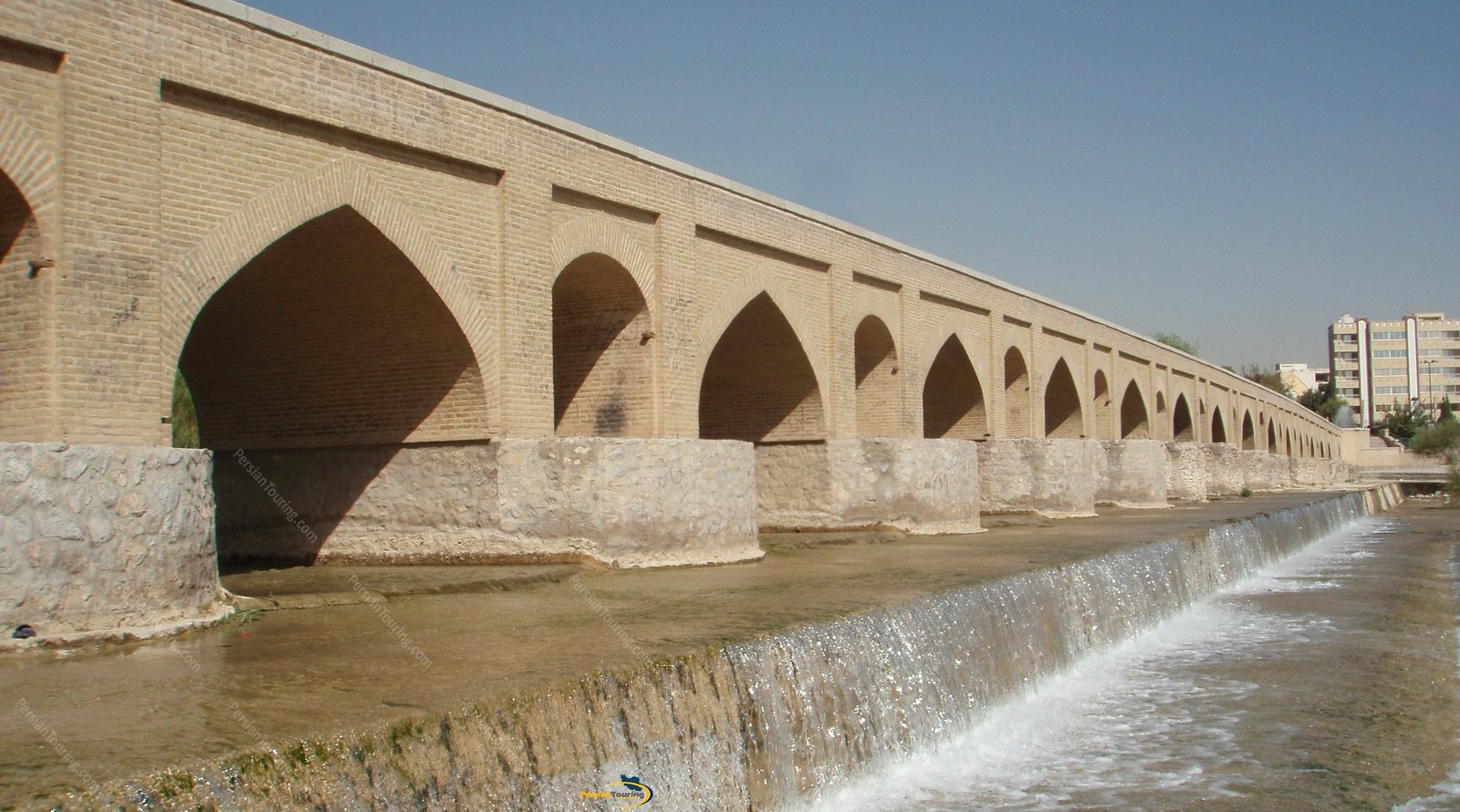
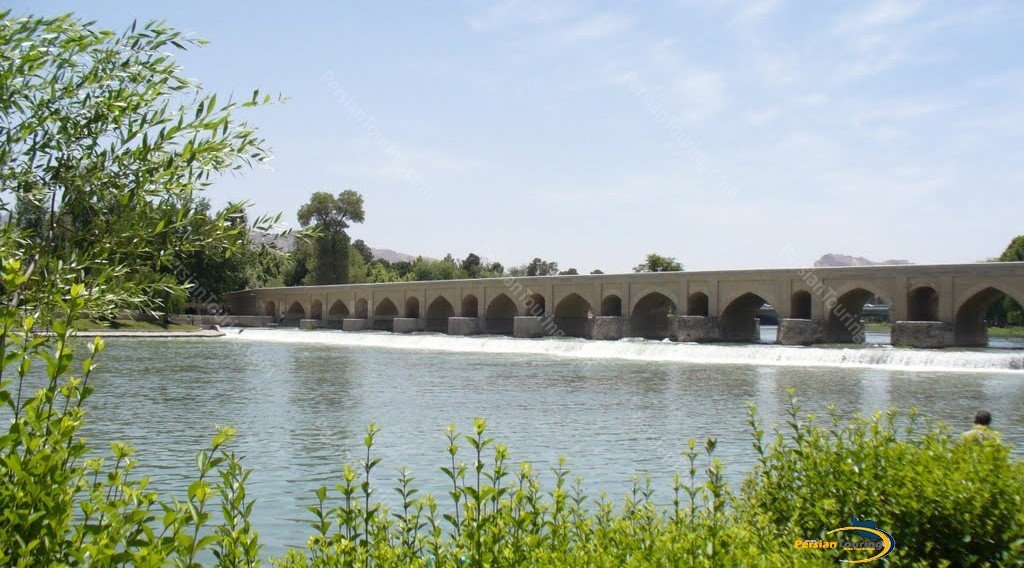
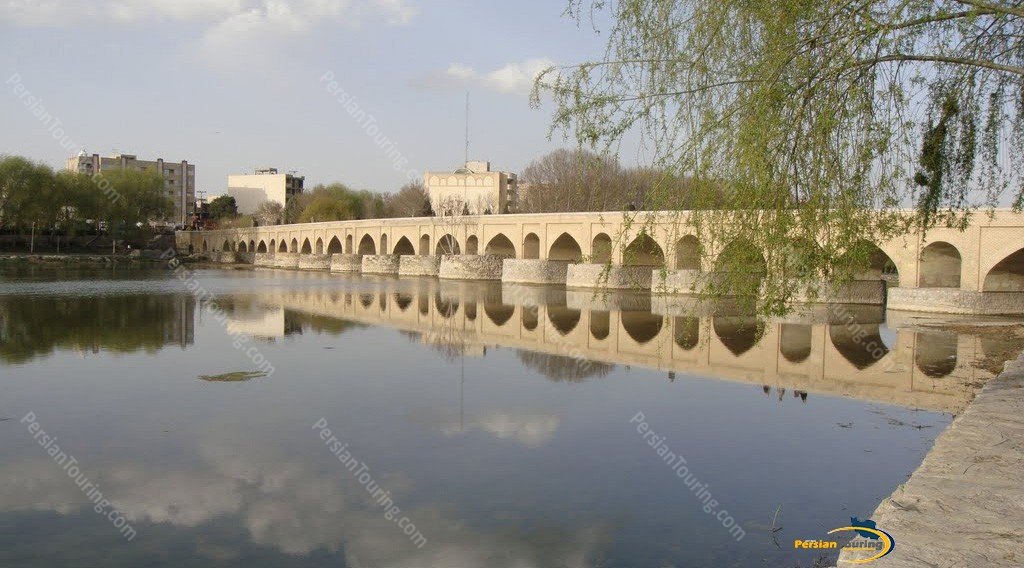
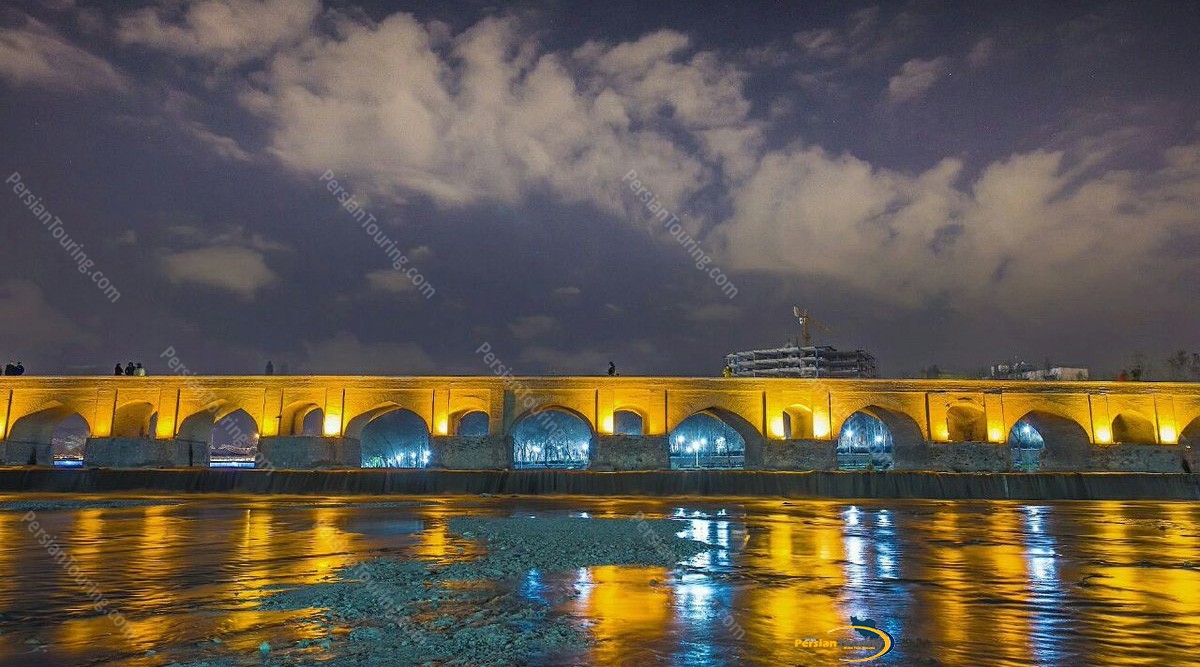
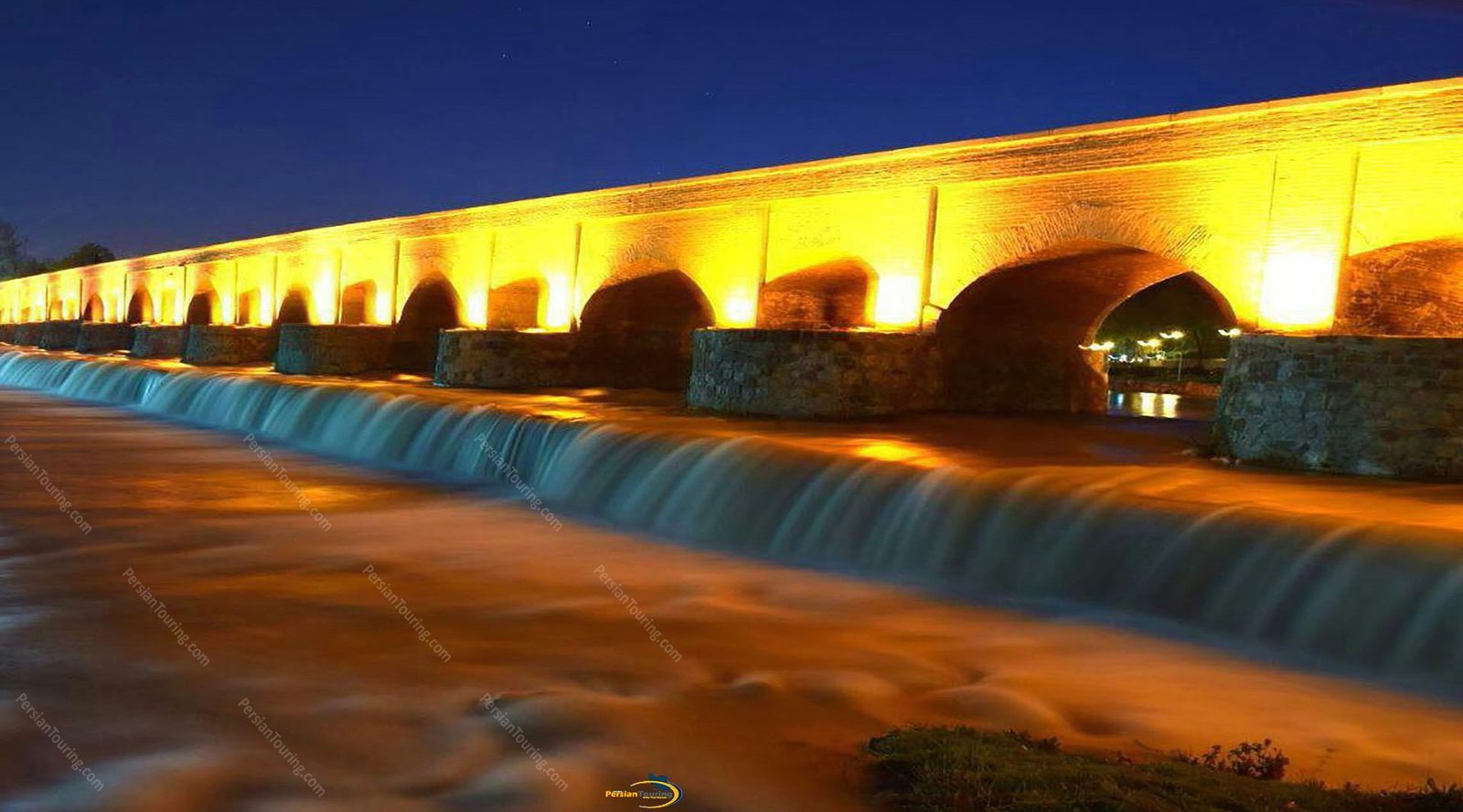
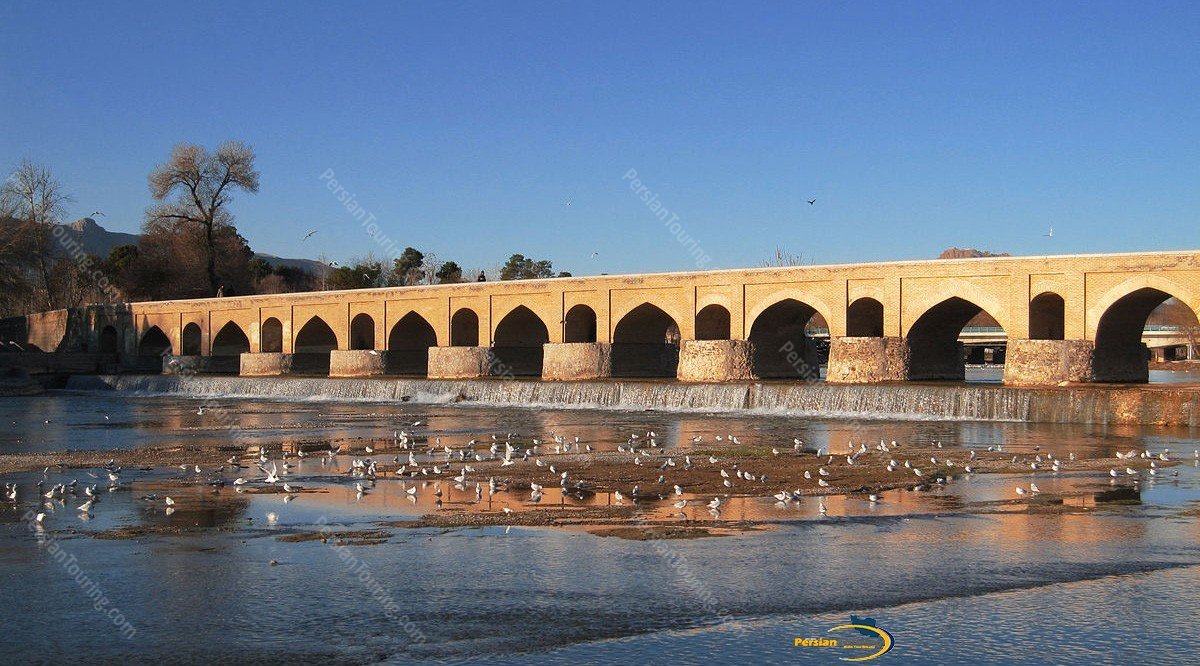
Marnan Bridge Isfahan is a historical bridge in Isfahan, Iran. The current structure of the bridge dates back to the Safavid era, but its foundations are older and possibly as old as the Shahrestan bridge, which dates back to the Sasanian era Marnan Bridge Isfahan is one of the historic bridges which was constructed west of the Safavid city. It was reconstructed during Safavid period. The original bridge was as old as the Shahrestan Bridge. In accordance with the available documents, the Marnan Bridge was replanned and constructed by the order of Khajeh Sarfaraz who was an Armenian administrator of Armenian district in Isfahan. This bridge is also called Sarfaraz and its appellation is […]



Khaju Bridge
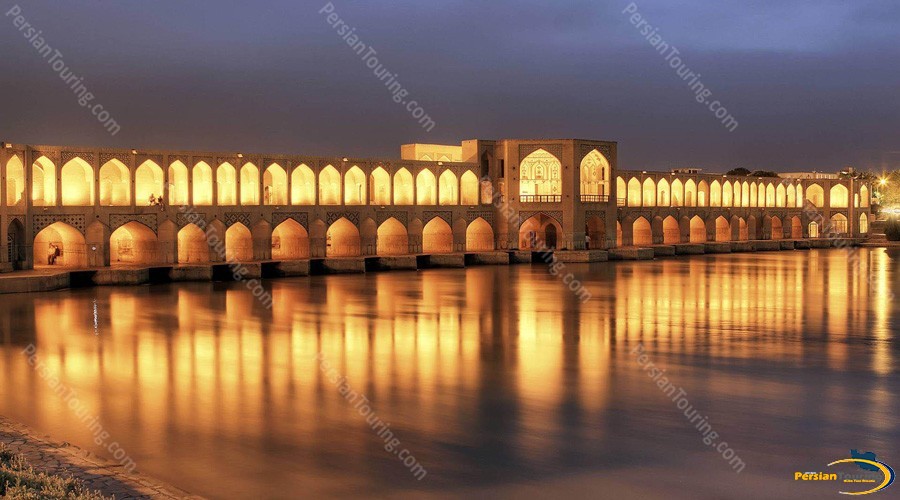
Khaju Bridge is a bridge in the province of Isfahan, Iran, which has been described as the finest in the province. It was built by the Persian Safavid king, Shah Abbas II around 1650, on the foundations of an older bridge. Serving as both a bridge and a dam (or a weir), it links the Khaju quarter on the north bank with the Zoroastrian quarter across the Zayandeh River. Although architecturally functioning as a bridge and a weir, it also served a primary function as a building and a place for public meetings. This structure was originally decorated with artistic tile work and paintings and served as a teahouse. In […]




Siosepol Bridge
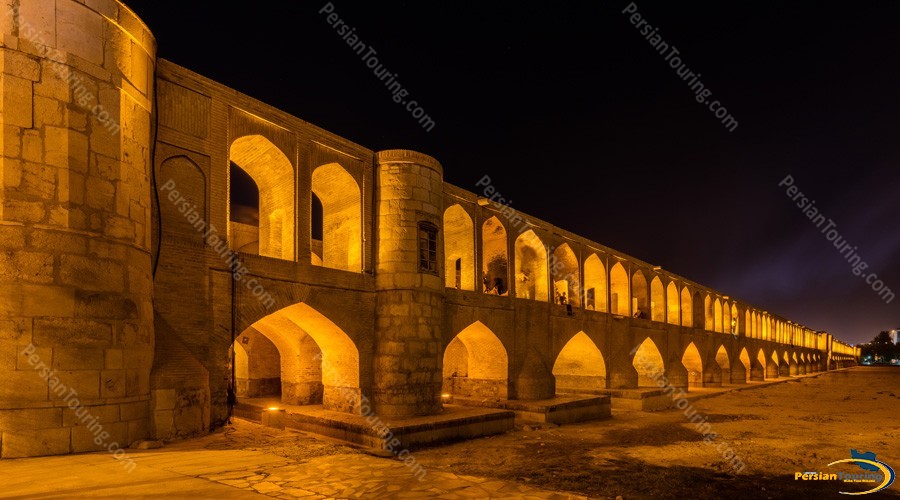
Si-o-see Pol Bridge is a stone double-deck arch bridge in Isfahan, Iran. It is also called Siose Bridge (which in Persian means “33 Bridge” or “Bridge of 33 Arches”) or Allah-Verdi Khan Bridge. Si-o-see Pol Bridge is built by the chancellor Allahverdi Khan Undiladze on commission from Shah Abbas whose chancellor he was. Construction of the bridge began in 1599 and ended 1602. The bridge is long 298 meters and wide 13.75 meters. It has 33 spans from which it gets its name with the longest span of 5.6 meters, crosses Zayandeh River and is located at the southern end of Chahar Bagh Avenue. The bridge has a large plane at the beginning of the bridge where Zayandeh River flows […]
Hasht Behesht Palace
Hasht Behesht, meaning “Eight Heavens” is a Safavid era palace in Isfahan, Iran. It was built in 1669 and is today protected by Iran’s Cultural Heritage Organization. Of more than forty mansions which existed in Isfahan during the rule of Safavids, this is the only one left today. In a dry city which is located at the edge of the desert, with long hot summer, Gardens and streams of waters, beautiful roses, shades of trees, the sound of birds and Nightingales play a great role in our lives. In a great part of Iranian literature, especially poems, gardens are beautiful parts of our lives. In holy Quran, several verses of this holy book talk about paradise, […]


Amir Chakhmagh Complex
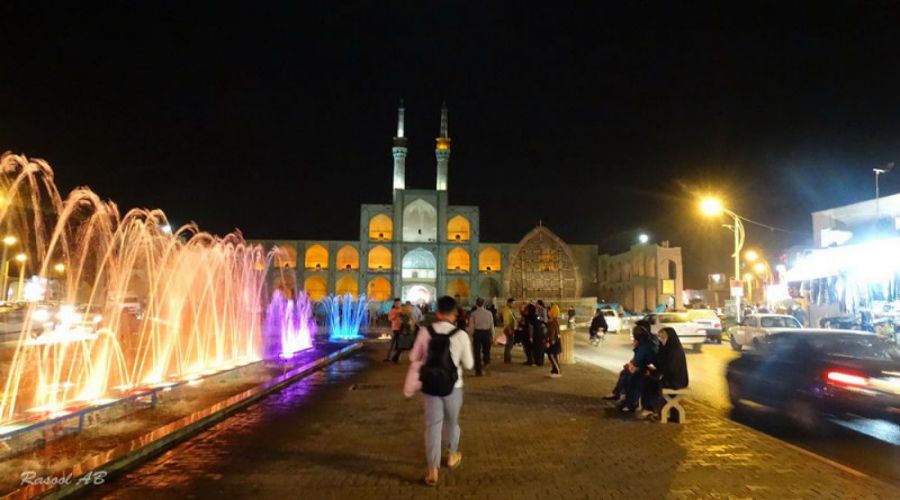
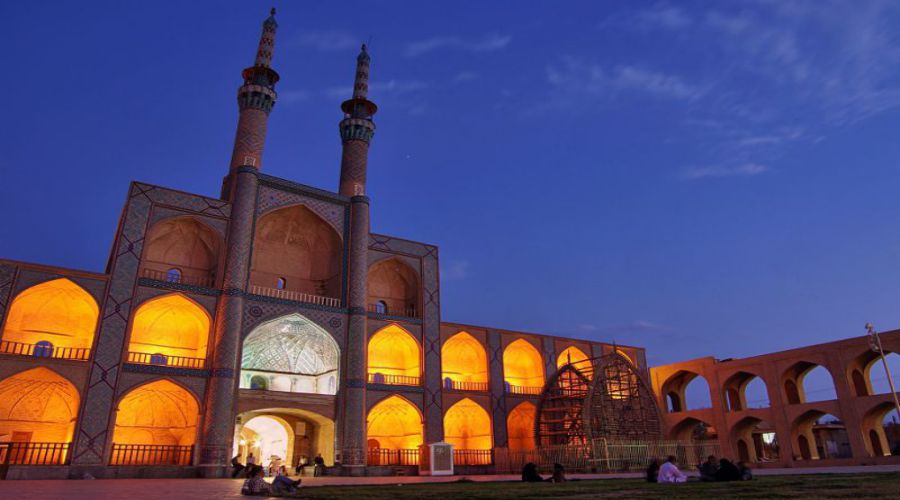
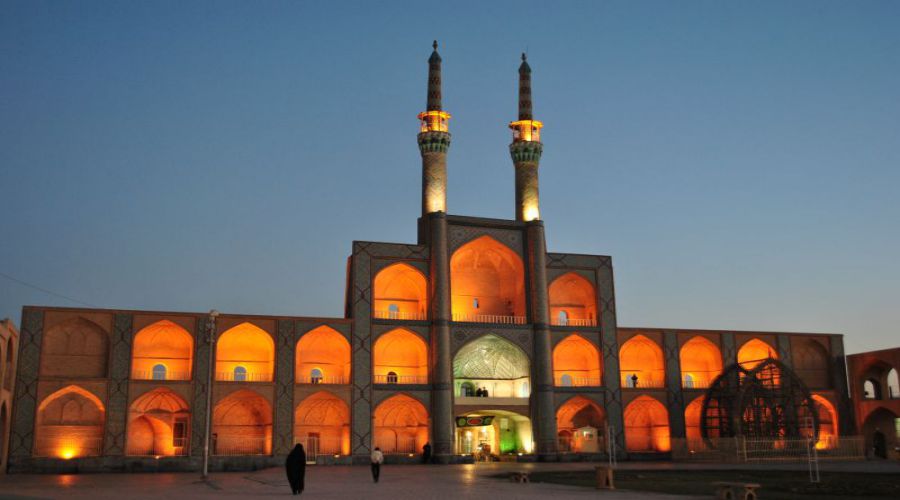
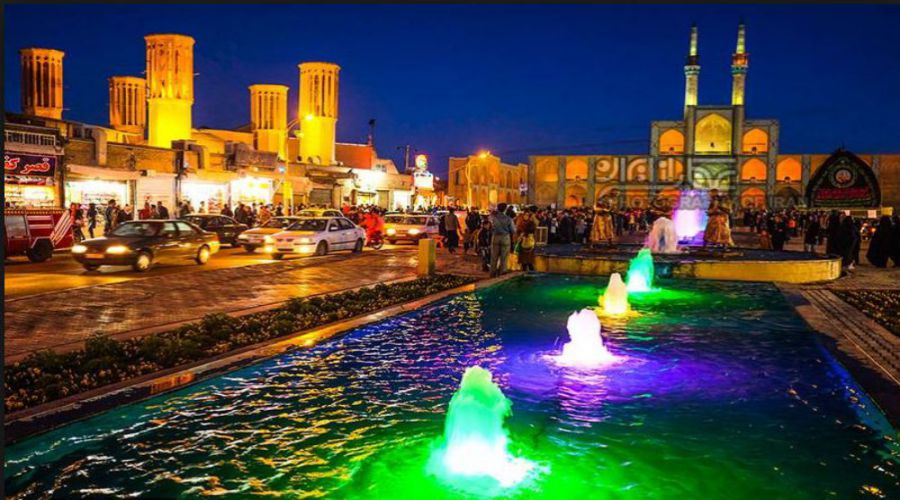
Amir Chakhmagh Complex is a prominent structure in Yazd, Iran, noted for its symmetrical sunken alcoves. It is a mosque located on a square of the same name. It also contains a caravanserai, a tekyeh, a bathhouse, a cold water well, and a confectionery. At night, the building is lit up after twilight hours after sun set with orange lighting in the arched alcoves which makes it a spectacle. During the Iran–Iraq War and the Iraq wars with the United States and Afghanistan, many Iraqis and Afghanis have come to inhabit the Amir Chakhmagh Square. The mosque is located on a square of the same name, named after Amir Jalaleddin Chakhmagh, […]


Tepe Sialk
Tepe Sialk is a large ancient archeological site in a suburb of the city of Kashan, Isfahan Province, in central Iran, close to Fin Garden. The culture that inhabited this area has been linked to the Zayandeh River Culture. The Sialk ziggurat was built around the 3000 BC. A joint study between Iran’s Cultural Heritage Organization, the Louvre, and the Institut Francais de Recherche en Iran also verifies the oldest settlements in Sialk to date back to 5500–6000 BC. Silk and the entire area around it are thought to have originated as a result of the pristine large water sources nearby that still run today. The Cheshmeh ye Soleiman (“Solomon’s Spring”) […]


Alamut Castle
Alamut was a mountain fortress located in Alamut region in the South Caspian province of Daylam near the Rudbar region in Persia (Iran), approximately 100 km from present-day Tehran. Between 1090 and 1256 AD, under the leadership of Hasan-i Sabbah, Alamut became the site of intense activity for the Shi’a Nizari Ismai’lis, functioning as the headquarters of their state, which was consisted a series of unconnected strategic strongholds scattered throughout Persia and Syria, surrounded by huge swathes of hostile territory (the Seljuq Empire). In 1256, Ruknu-d-Dīn Khurshāh surrendered the fortress to the invading Mongols, and its famous library holdings were destroyed. Sources on the history and thought of the Ismailis […]


Maranjab Desert
The Maranjab Desert is located in Aran va bidgol, Iran and around 60Km north-east of Kashan. Maranjab Aran Bidgol in the northern city of Aran Bidgol located in Isfahan province. This desert from north to Salt Lake Aran Bidgol, the West Desert Lakes issue and salt pond and dock Sultan Moreh, from East to desert sand dam and Desert National Park and the southern city of Aran and Bidgol is limited. The average height of about 850 meters Maranjab sea level and the highest point of the island is about 880 meters above sea level, and needs to be security, relative moderation, variety of tourist attractions, the diversity of animal species and […]


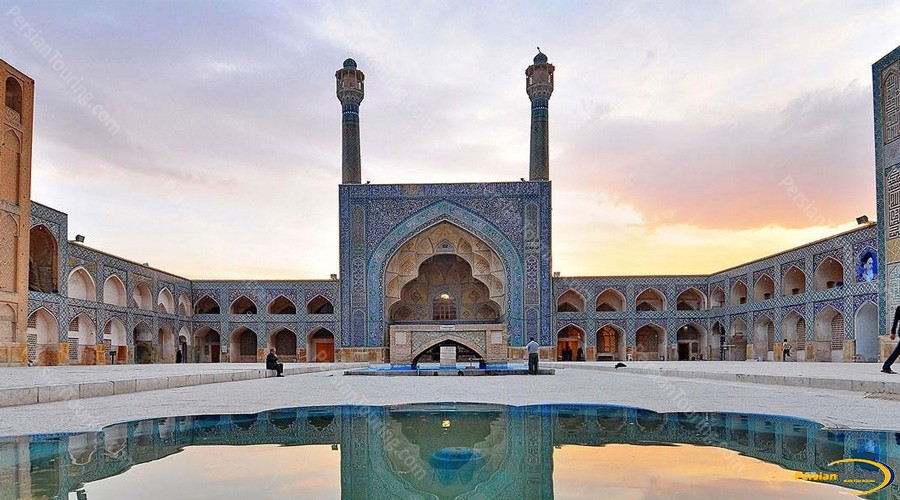


Jameh Mosque of Isfahan
In Islamic countries, in every city, there is a congregational mosque. In fact, the most important mosque in each city is called the Jame mosque. Friday sermon or prayer is recommended to Shiites and congregational mosques in towns and cities are used for the Friday sermons. In metropolitan cities, vast areas have been allocated for this purpose. Masjede Jame in Isfahan is the most remarkable mosque in Isfahan. It is an encyclopedia of Iranian and Islamic art and architecture. Step by step development of Iranian art and architecture can be seen in this complex. It takes at least half a day to visit different parts of it. The complex shows various structures from different centuries […]
最近のコメント